

By: Jeffrey D. Brasie, M.A.
Images courtesy of Ford Motor archives and the Batmobile website.
Edited by MotorCities National Heritage Area Staff
MotorCities Story of the Week
For more than 85 years, Batman has stood the test of time, appearing in comic books, television series, cartoons, movies, Halloween costumes and action figures. He has even inspired a monster truck.
The Batman universe has its own vocabulary, including the Batcave, utility belt, Batgirl, Batsuit, Batphone and the famous Bat-Signal flashing across Gotham City’s night sky.
But what about the Batmobile?
The Television Series
Faithful Batman followers will recall the ABC television series Batman, which aired from January 1966 to March 1968.
Emerging from the Batcave was the Batmobile screaming on Gotham City streets and thoroughfares to fight ominous crime.
Automotive history accounts indicate that the television show’s Batmobile was initially planned around a 1959 Cadillac. However, time constraints and production demands led to a different choice: a concept car from Ford Motor Co.
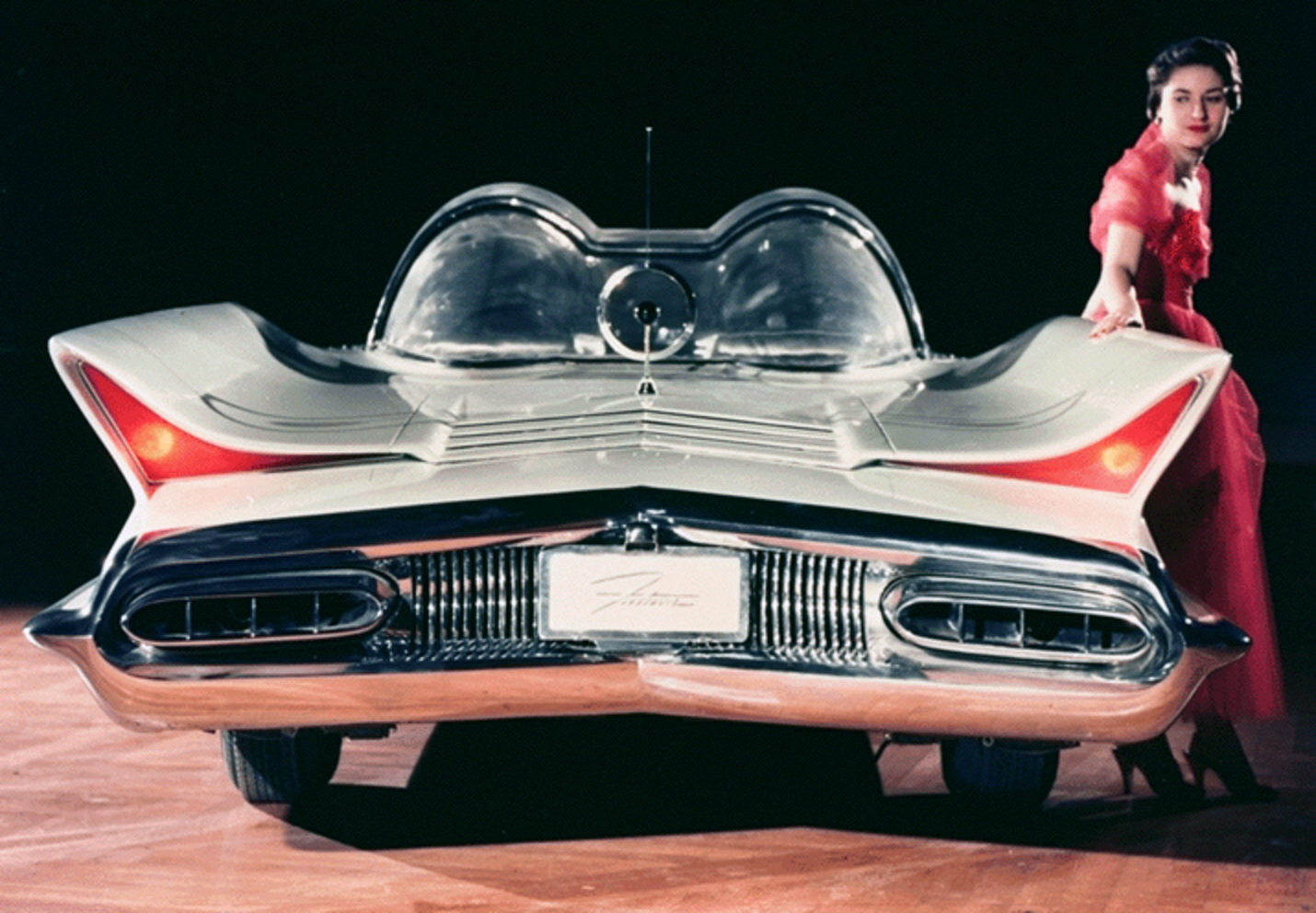
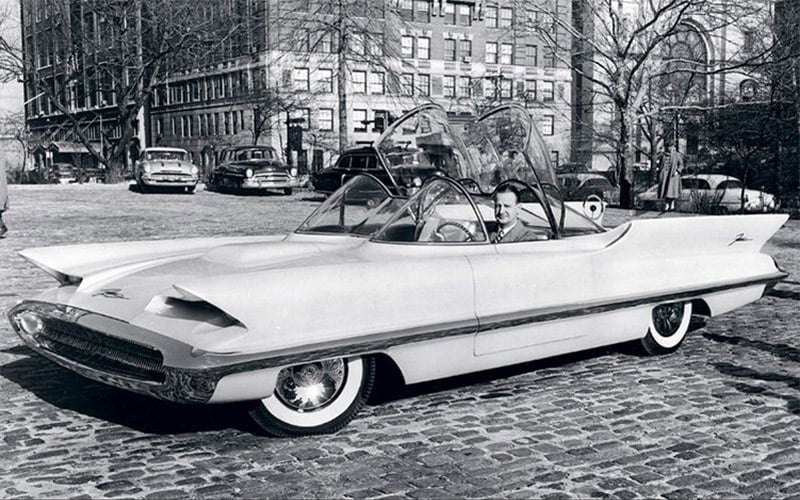
The show’s producers turned to Hollywood custom-car designer George Barris to create the iconic vehicle. Barris selected Ford’s one-of-a-kind Lincoln Futura concept car and transformed it into the Batmobile.
Built by Italy’s Carrozzeria Ghia, the futuristic Futura reportedly cost $250,000 ($3 million plus in today’s dollars) to design and construct. It debuted at the Chicago Auto Show in January 1955, where its unusual styling attracted attention.
Barris acquired the Futura from Ford for a reported $1. The car would soon become one of the most recognizable vehicles in television history.
The History of the Batmobile website stated, “The Futura worked perfectly as a Batmobile, as it had many "bat" features already built into the design such as the long fins and bubble canopies. Barris further enhanced the theme by converting the nose into an integrated bat mask. He also opened the wheel wells and modified the Futura's fins into subtle bat wings by extending their leading edges into the doors and scalloping the trailing edges. Once bodywork was complete, the car was painted gloss black with red trim to accentuate the car’s various lines.”
Click here to listen to the Batman 1966 Television Series HD - Theme Song Opening & Closing Credits
The original television Batmobile became such a sensation that three additional replicas were built for promotional and exhibition purposes, according to the website.
The Early Batmobiles
Batman first appeared in Detective Comics No. 27, cover-dated May 1939. His crime-fighting companion, Robin, made his debut in Detective Comics No. 38 in April 1940.
So, when did the Batmobile first appear, and what did it look like?
The vehicle did not yet have a name. The term “Batmobile” appeared in Detective Comics No. 48 in February 1941. The car’s design gradually evolved, eventually taking on the distinctive bat-inspired features that fans recognize today.
In 1943, Batman made his live-action screen debut in a movie serial released in theaters.
Suburban Chicago’s Volo Auto Museum web site revealed a Harley Earl designed 1939 Cadillac Series 75 convertible was used in the motion picture. The vehicle exhibited few modifications and gadgets.
The Cadillac was dually used as Bruce Wayne and Batman’s personal vehicle. When the top was up – it was the Batmobile.
A 1949 Mercury convertible was introduced as the next Batmobile. The Mercury offered a sleek post-war design. However, Volo noted the convertible was switched out six times due to poor handling and cornering.
Batmobiles After Television: The Movie Era
Tim Burton’s Batman
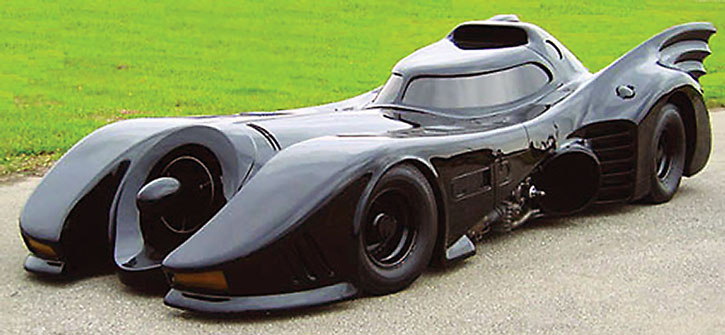
Tim Burton’s Batman (1989) and Batman Returns (1992), starring Michael Keaton, introduced a dramatic new Batmobile design.
Gone was the television car’s red trim. In its place was a long, sleek, black vehicle with minimal chrome and a menacing silhouette. The design looked as though it belonged in Gotham City’s shadows rather than in plain sight.
This Batmobile featured an array of fictional gadgets, including retractable armor, machine guns and disc launchers. It could also perform a rapid 180-degree turn.
In Batman Returns, the vehicle could transform into a narrower, missile-like configuration known as the Batmissile, allowing Batman to navigate tight spaces.
Batman Forever
The 1995 film Batman Forever, starring Val Kilmer, introduced a Batmobile with sculpted side ribs, a split cockpit and prominent bat-like wings at the rear.
The Batman logo appeared on the wheels, designed to remain upright as the wheels rotated. The vehicle’s striking appearance made it one of the franchise’s most distinctive interpretations.
Among its gadgets was a grappling system that allowed the Batmobile to climb vertical surfaces, adding another dramatic capability to Batman’s crime-fighting arsenal.
Batman & Robin
In 1997, George Clooney took on the role of Batman in Batman & Robin. The film introduced another new Batmobile design, replacing the previous model’s side ribs with a more open body and enlarging its fins.
The rear exhaust arrangement also changed, with multiple smaller exhaust nozzles replacing the earlier design’s single prominent outlet. The result was a more elaborate, futuristic appearance.
Batman Begins
In 2005, Christian Bale starred in Batman Begins, which introduced a radical departure from the traditional Batmobile.
Known as the Tumbler, the two-ton vehicle resembled an armored military machine more than a conventional sports car. Its designers aimed for a rugged, aggressive appearance that emphasized function over elegance.
The Tumbler could also deploy a motorcycle called the Batpod. Batman could eject the Batpod from the vehicle and continue his escape on two wheels. In the film, the Tumbler could self-destruct as part of a diversion, helping Batman evade his pursuers.
Batman v Superman: Dawn of Justice
More than a decade later, Ben Affleck appeared as Batman in Batman v Superman: Dawn of Justice (2016).
This Batmobile featured a low-slung, streamlined body with a broad stance. Its muscular proportions and heavily armored appearance suggested a vehicle capable of forcing its way through obstacles.
The fictional vehicle carried an impressive collection of equipment, including a mounted machine gun, harpoons, sonic devices, scanning technology, night vision and protective systems. Its adjustable suspension also helped it navigate uneven terrain.
The Batman
In 2022, Robert Pattinson starred in The Batman, introducing yet another interpretation of the iconic vehicle.
The design departed from the futuristic, heavily armored machines of earlier films. Instead, it drew inspiration from classic American muscle cars, particularly the styles of the 1960s and 1970s.
Volo commented, “It pulls from old designs like the 1960s television version while adding modern twists and elements that fit into the movie’s dark, gritty storyline.”
The Batmobile’s wide fenders, aggressive front end and imposing bumper gave it a powerful, street-ready appearance. Its hood featured a dramatic red glow that added to the vehicle’s ominous presence.
The rear of the car was dominated by an exposed engine and exhaust assembly, creating a raw, mechanical look. The production’s vehicle design reportedly featured a Chevrolet LT4 V-8 engine, with the engine and exhaust arrangement contributing to the car’s distinctive appearance.
Volo concluded, “The rear window and trunk have been removed and replaced with a monster of an engine — a 641-horsepower Chevrolet LT4 V8 with various turbochargers and an exhaust afterburner. The rear engine helps control the car's huge back wheels through a type of transaxle.”
Unlike earlier versions, this Batmobile looked less like a futuristic gadget-filled machine and more like a muscle car built for high-speed pursuits through Gotham City.
What Will the Next Batmobile Look Like?
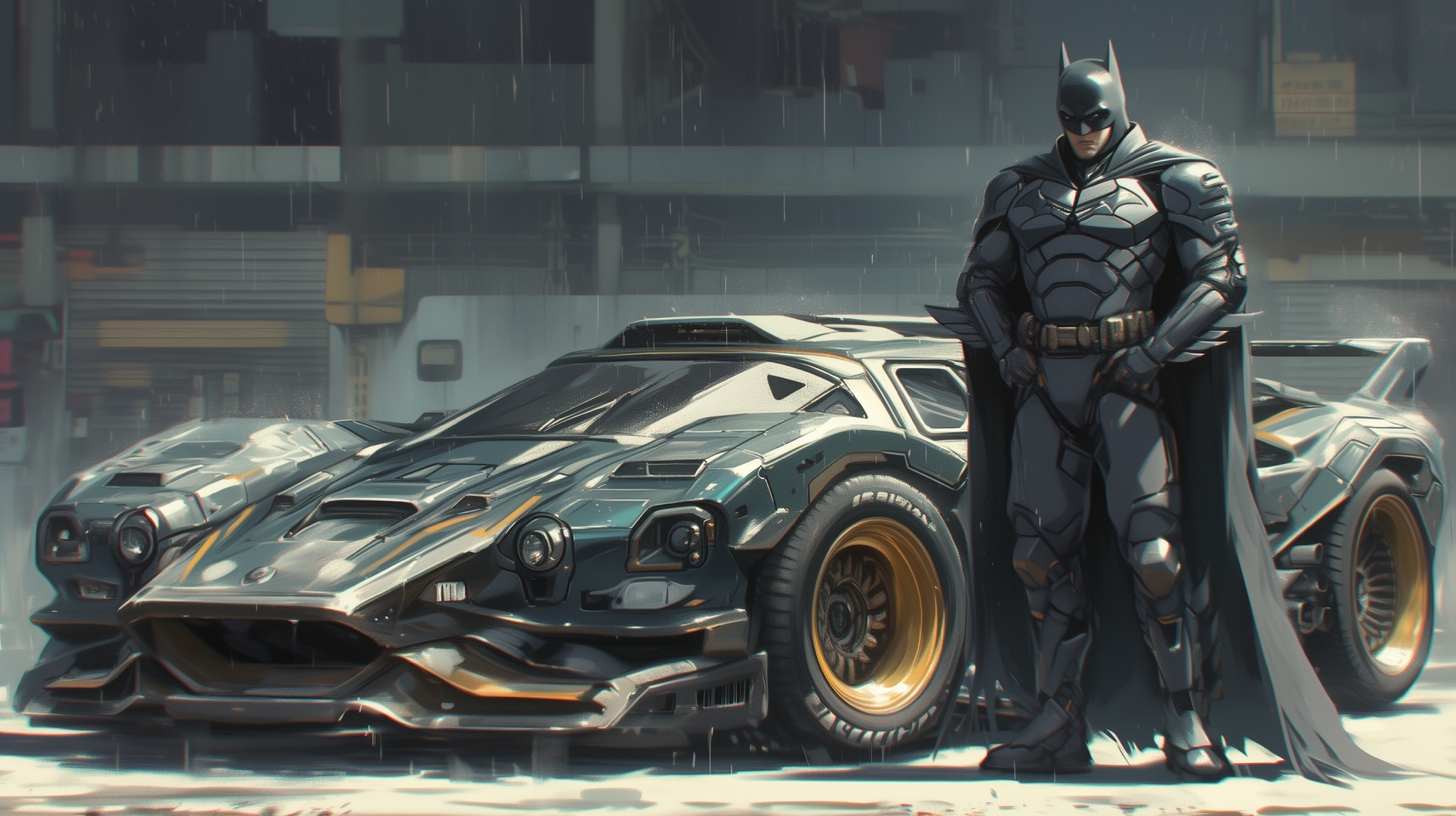
With every new Batman production, designers find fresh ways to reinvent the Dark Knight’s famous ride. Some versions emphasize futuristic technology, while others favor muscle-car styling or military-inspired toughness.
The next chapter in the franchise is The Batman: Part II, tentatively planned for a fall 2027 release.
Bibliography
• Volo Auto Museum: www.volocars.com
• Batmobile History: www.batmobilehistory.com
• Car and Driver Magazine: www.carandriver.com March 3, 2022, edition
• CBR – A Brief History of the Batmobile: www.cbr.com, June 29, 2022, edition
About the writer: Jeffrey D. Brasie is a retired health care CEO. He frequently writes feature stories and op-eds for various newspapers, magazines, and social media sites. As a Vietnam-era veteran, he served in the U.S. Navy and U.S. Naval Reserve. He served on the public affairs staff of the Secretary of the Navy.