

By: Robert Tate, award-winning automotive historian and researcher
Images courtesy of Henry Ford Media Archives.
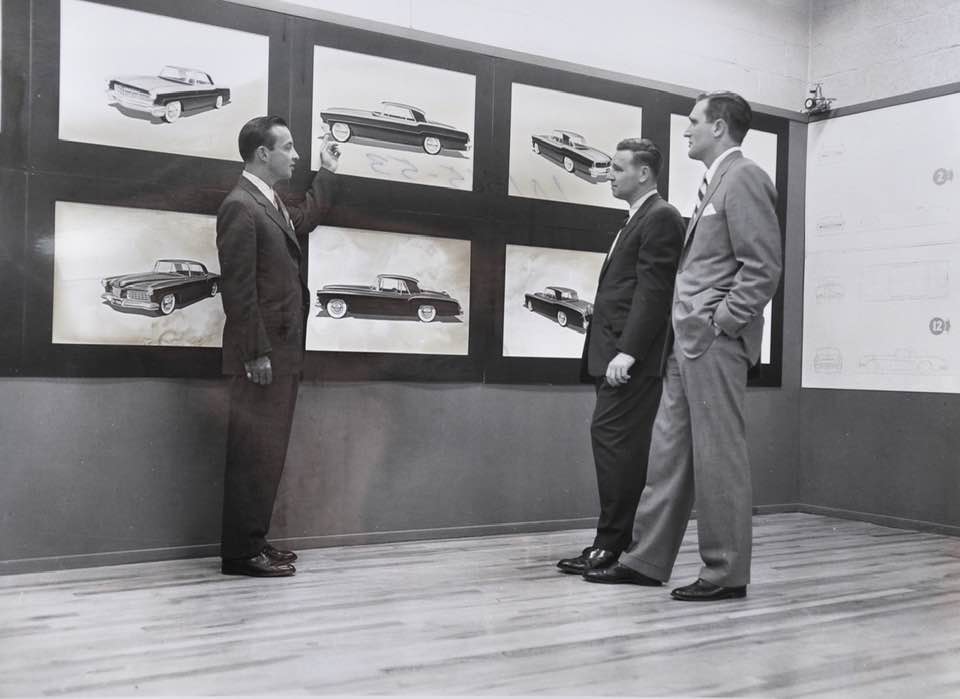
Henry Ford discussing the new design 1956 Lincoln Continental Mark II in design studio.
The 1956 Lincoln Continental Mark II made its public debut at the Paris Auto Show to strong acclaim from spectators. The Continental spare tire mounted on the rear deck was widely seen as a distinctive symbol of Lincoln heritage. For 1956, the Mark II represented an entirely new design. The car’s $10,000 price made it the most expensive automobile in Ford’s 1956 lineup. Some automotive historians have described the Mark II as a statement of good taste and classic simplicity.
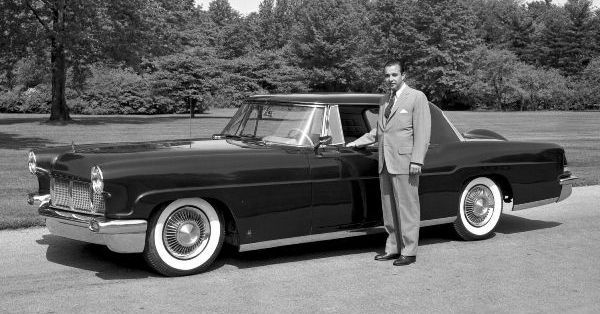
William Clay Ford with 1956 Lincoln Continental Mark II.
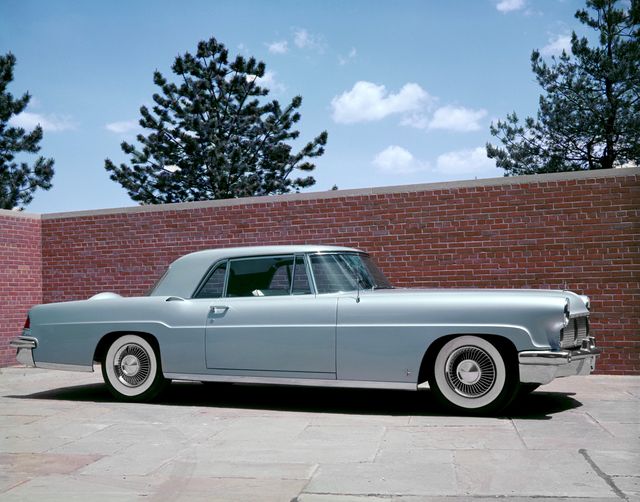
1956 Lincoln Continental Mark II.
Ford automotive designer Bill Schmidt said the crisp lines of the 1956 models “grew out of observations made while skin-diving in the clear waters of the Bahamas."
The 1956 Lincoln Continental Mark II was the longest, lowest, and most completely restyled Lincoln available to the public in 1956. Buyers could choose from a range of exterior and interior color combinations. A newly designed instrument panel incorporated a Buck Rogers–inspired, aircraft-style design associated with the 1950s. The Mark II was offered for only two years, 1956 through 1957.
In addition to displays at the Ford Rotunda in Dearborn, Michigan, the 1956 Lincoln models were introduced to dealer showrooms nationwide on Friday, October 21, 1955. The Mark II was sold as a two-door hardtop, though two convertible models were built by Derham in partnership with Lincoln’s own design shops.
At the time, Ford spared no expense in manufacturing and production. William C. Ford, vice president and group executive of Ford Motor Company and general manager of the Continental Division, said: “The Continental is designed for an exclusive market—a prestige market consisting of persons with good taste who want an automobile embodying distinction, luxury, dignity and quality.”
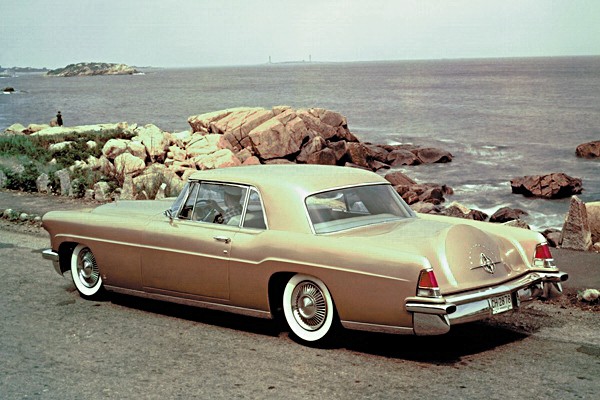
1956 Gold Lincoln Continental Mark II.
After the model year in 1957, the Lincoln Continental Mark II would be discontinued. Many automotive historians have said that 1957 was a disappointing year for Lincoln sales. For the first time in Ford’s automotive history, quad headlights were used on all Ford product line models for 1958. For 1957, the Lincoln Continental Mark II manufactured only a production run of only 3,000 units for the Lincoln dealerships in 1957.
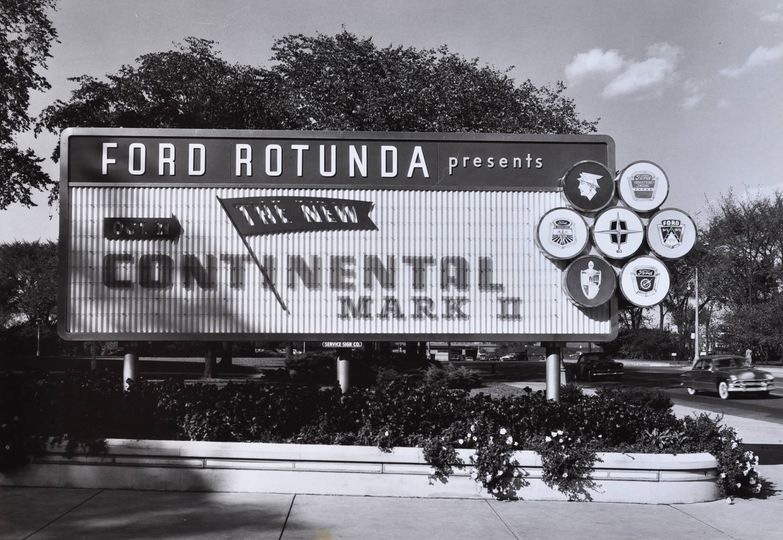
Sign entrance for the Ford Rotunda showroom building featuring the new Lincoln model.
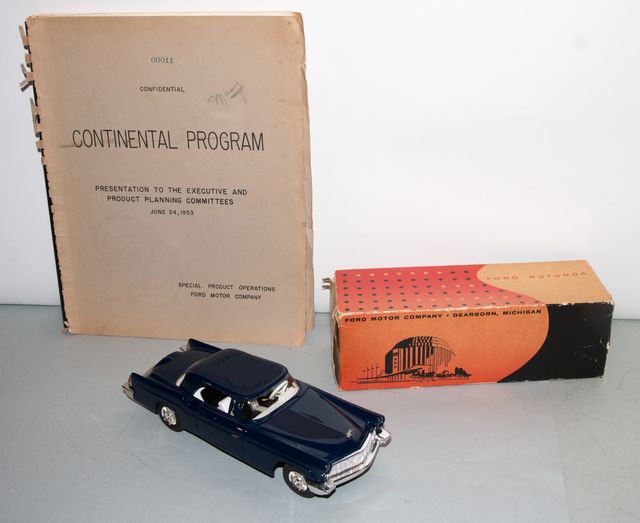
1956 Lincoln Continental Mark II toy model with Rotunda box.
On a collectors’ note, the Ford Rotunda showroom also sold miniature replicas of the new Ford line during the 1950s, packaged in special Ford Rotunda boxes that remain highly collectable and sought after by toy collectors. For 1957, the price of the Lincoln Continental Mark II was lowered to $9,966. Upholstery featured imported top-grain cowhide, and the appointments were made with the finest materials available. Some consumers complained about its build up and low-speed characteristics, though the model was not intended for racing.
In conclusion, the Lincoln Continentals of 1956 and 1957 arrived at a time when many Americans were not spending heavily on automobiles. In 1957, Ford devoted substantial time to introducing the 1958 Edsel—a project that, as automotive history records, did not go as planned. Today, the 1956 and 1957 Lincoln Continental Mark II models are prized collector vehicles and can be expensive to restore.
Bibliography
Dammann H. George. “Fifty Years of Lincoln Mercury” Crestline Publishing 1971.
Sorensen Lorin. “Ford’s Golden Fifties” Silverado Publishing company 1997.
Automobile Quarterly Magazine. “The Legend of Lincoln” Produced Exclusively for Ford Motor Company, Automobile Quarterly Publications 1987.