

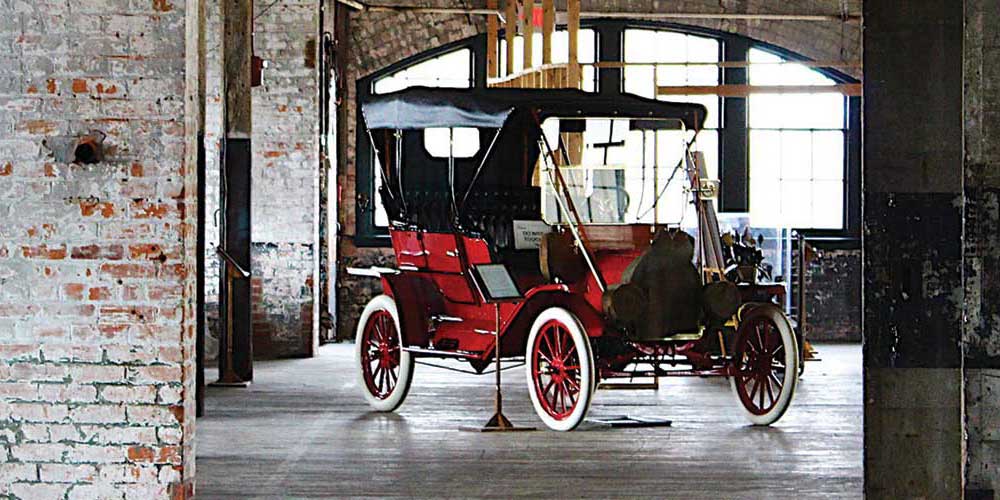

By: Robert Tate, award-winning automotive historian and researcher
Images courtesy of Henry Ford Media Archives/ GM Heritage Archives & Special Collections.
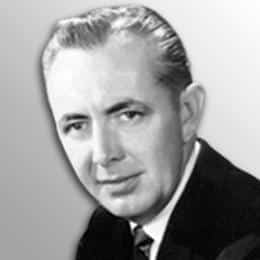
Portrait of Eugene Bordinat
Eugene Bordinat (February 10, 1920–August 11, 1987) was an automotive designer for Ford Motor Company and later became a prominent vice president of styling and chief designer. From an early age, he knew he wanted to pursue car design, and he followed that path through formal education and early industry training. At the University of Michigan, Bordinat was among the first group of students accepted into an automobile design program, which was originally established at General Motors for young automotive designers. He later continued his studies at Cranbrook Academy in Bloomfield Hills, Michigan.
After completing his automotive design education, Mr. Bordinat began his career with General Motors Styling in 1939 as a junior designer. As his work progressed, he gained the attention of Harley Earl, who oversaw automotive styling at General Motors. During this early period, Bordinat contributed to several notable projects, including designing a new front end for the 1941 LaSalle automobile and working within the 1942 Chevrolet design studio.
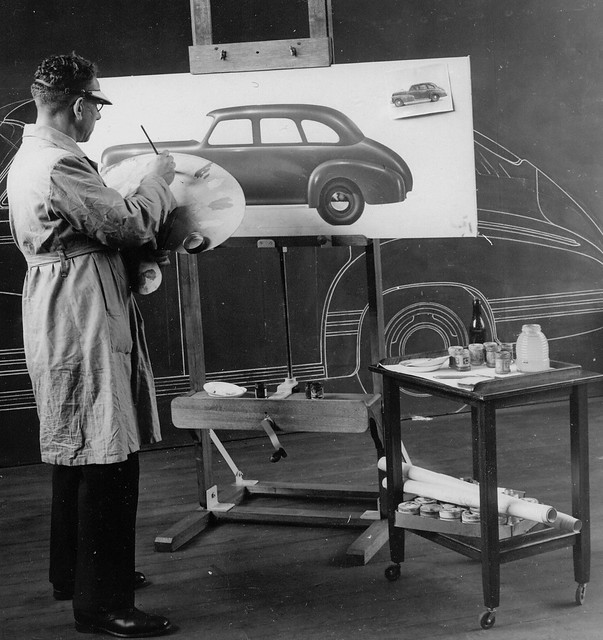
GM Chevrolet design studio early 1940’s.
Mr. Earl became very impressed with Bordinat’s new styling work, and in recognition of his skill and dedication, Bordinat received a significant bonus. As the early 1940s began and World War II escalated, his career temporarily shifted from automotive design to wartime production efforts. During this period, Bordinat contributed to establishing tank production lines at General Motors’ Fisher Body plant in Flint, Michigan. He also later served in the United States Army Air Forces, further supporting the national war effort. After the war concluded and production demands shifted back to peacetime industry, he returned to General Motors’ design studios as a senior designer.
In August 1947, Eugene Bordinat made a pivotal career transition when he joined Ford Motor Company’s advanced design studio. By 1954, he had risen to become manager of the Lincoln-Mercury design department, where he worked alongside and led several notable designers, including William M. Schmidt, chief designer for the Lincoln studio; Don DeLaRossa, chief designer for the Mercury studio; and John Najjar, who headed Lincoln-Mercury’s design and advanced styling section.
Later, in 1961, Bordinat was promoted to vice president of design and chief designer, marking a major milestone in his automotive career. This position placed him as the successor to George W. Walker at Ford Motor Company and solidified his influence on the company’s design direction during a significant period of automotive styling evolution.
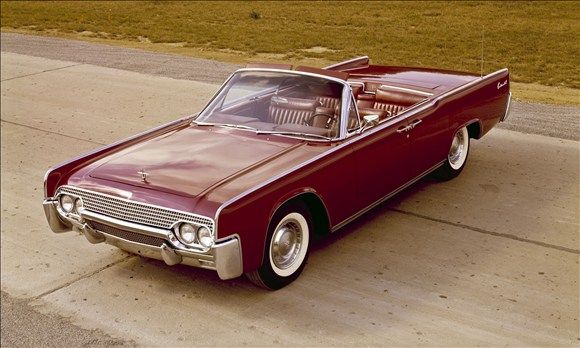
1961 Lincoln Continental design.
During Bordinat’s, automotive career at Ford Motor Company many great and successful automotive designs followed throughout his career and great automotive leadership. For example, the beautiful design of the 1961 Lincoln Continental along with the popular Ford Falcon, Mercury Cougar and other Ford products that many Americans drove and thoroughly enjoyed throughout the 1960’s.
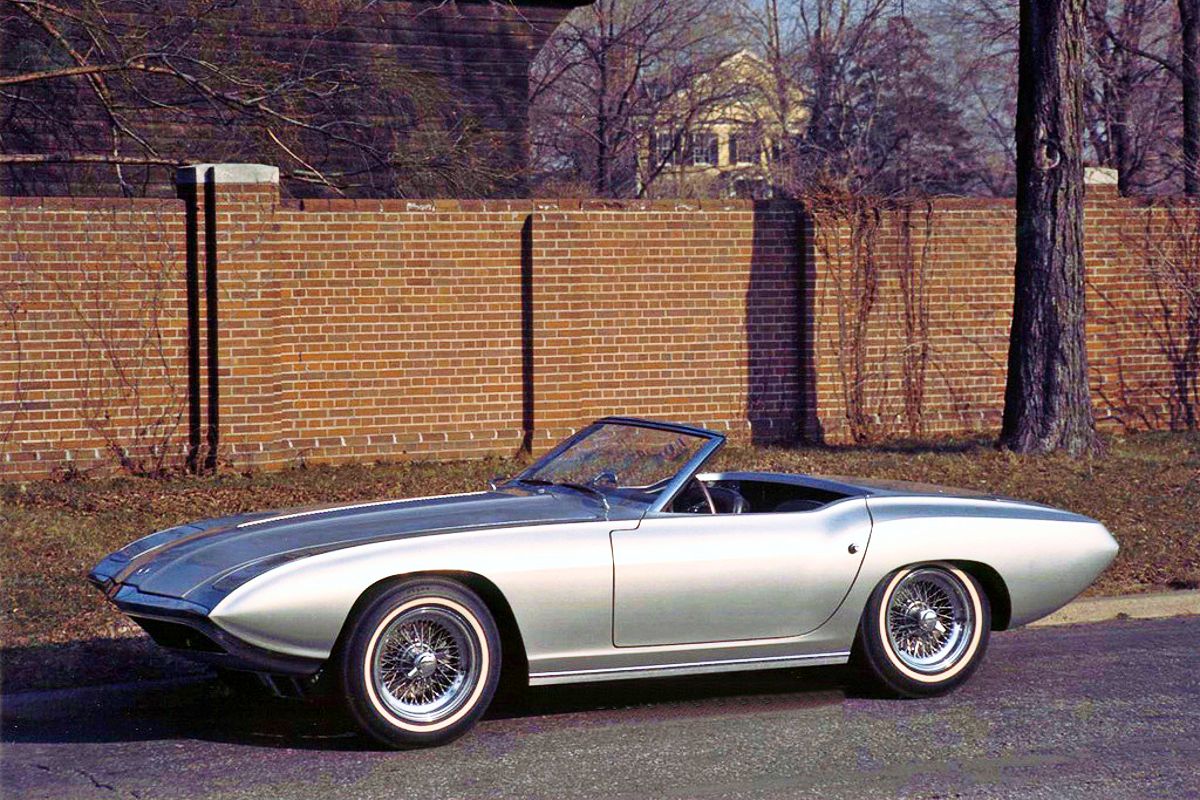
1964 Cougar II concept model.
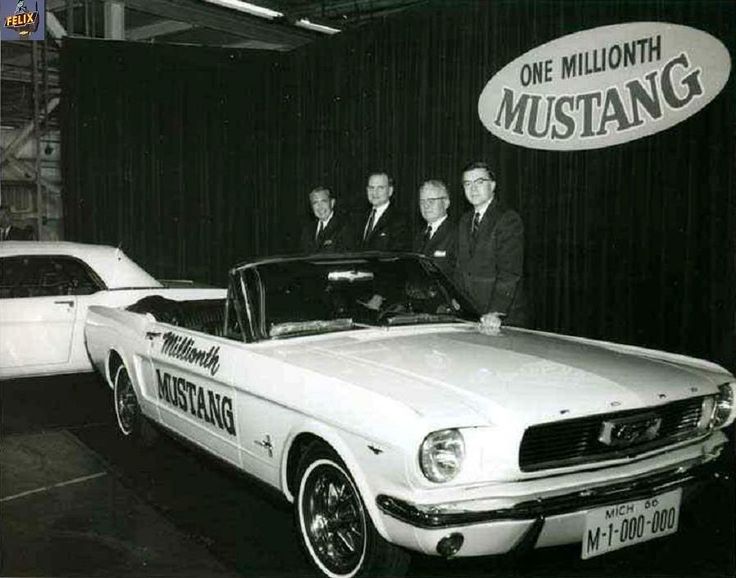
1964 Ford Mustang Pace Car with Ford Executives.
Elwood Engel, who was selected to become Bordinat’s successor, had worked extensively on the development of the 1961 Lincoln Continental, a vehicle that received several major design awards. Reflecting on his career, Bordinat once said, “I had worked with many great talented designers at Ford Motor Company.” He also noted the long development cycles in the industry, explaining, “As you know cars are developed or, in those days particularly at Ford about three years before they even hit the road.” In 1965, he became a member of the Industrial Designers Society of America.
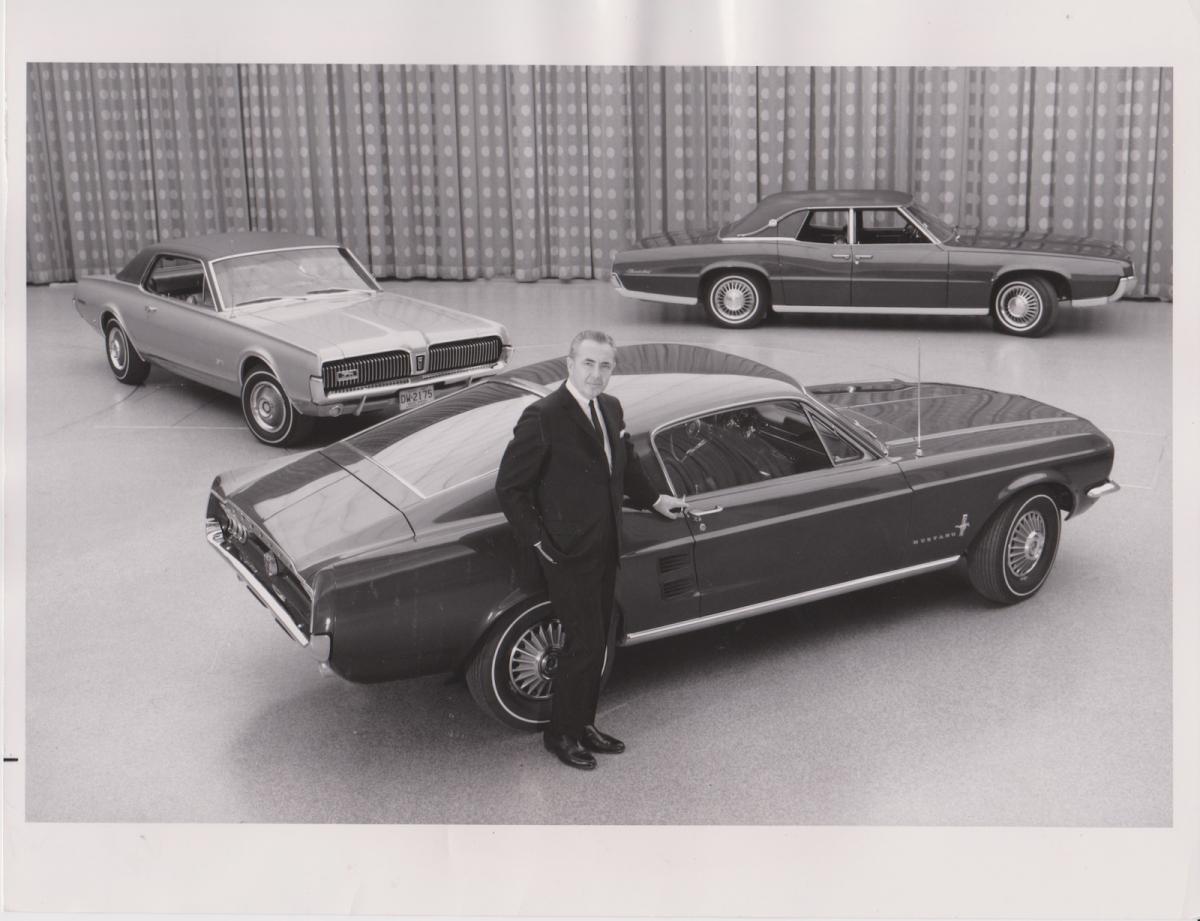
Eugene Bordinat with the 1967 Ford automobiles.
Later in his career, Bordinat received several honors recognizing his contributions to automotive design. In 1977, he was awarded the Automotive Hall of Fame Distinguished Service Citation, and he also received an honorary degree from the Art Center of Los Angeles. He is further remembered for his remark, “Beauty is a good 10-day sales report,” reflecting his practical view of automotive styling and market success. In retirement, he wrote a light-hearted autobiography manuscript entitled My Days at the Court of Henry II. Eugene Bordinat passed away at Henry Ford Hospital on August 11, 1987.
He remains an important figure in automotive design history, remembered for his leadership, influence, and lasting contributions to the industry.
Biography
Michael Lamm & Dave Holls. “A Century of Automotive Style 100 Years of American Car Design.” Lamm-Morada Publishing Co. Inc 1996-97.
David Crippen. The Henry Ford “The Reminiscences of Eugene Bordinat Jr.” Automobile in American Life and Society Automotive Design Oral History Project 1985.