


By: Robert Tate, award-winning automotive historian and researcher
Images courtesy of GM Heritage Archives & Special Collections.
Edited by MotorCities National Heritage Area Staff
Published on 07.08.2026
The Pontiac nameplate has a rich and distinguished place in automotive history and will always be an important part of our great automotive heritage. Although Pontiac was discontinued in 2010, General Motors announced on April 27, 2009, that the brand would be phased out as part of the company's restructuring. However, the history and the innovative automotive designs that Pontiac introduced have left a lasting legacy that continues to be remembered and appreciated by automotive enthusiasts around the world.
Many automotive historians have noted that the name Pontiac appeared during the early Horseless Age. For example, the Pontiac Spring & Wagon Works planned to market a three-model line of automobiles, including a runabout, in 1907. Another nameplate closely connected to Pontiac's history is Oakland. In January 1909, General Motors purchased half interest in the Oakland Motor Car Company. William C. Durant, who founded General Motors, played a key role in the acquisition, and GM later gained full control of the Oakland nameplate.
It was Alfred P. Sloan who championed the creation of the Pontiac brand, which was introduced by General Motors in 1926 as a companion marque to Oakland. Pontiac would eventually eclipse its parent brand in popularity, and the Oakland nameplate was discontinued after the 1931 model year. Today, Pontiac remains an enduring chapter in American automotive history and continues to be celebrated by collectors and enthusiasts alike.
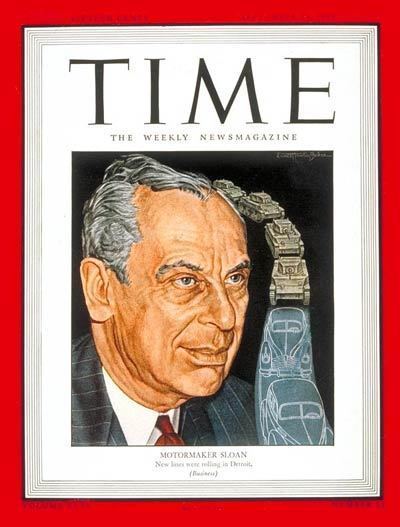
Alfred P. Slown on the cover of Time magazine.
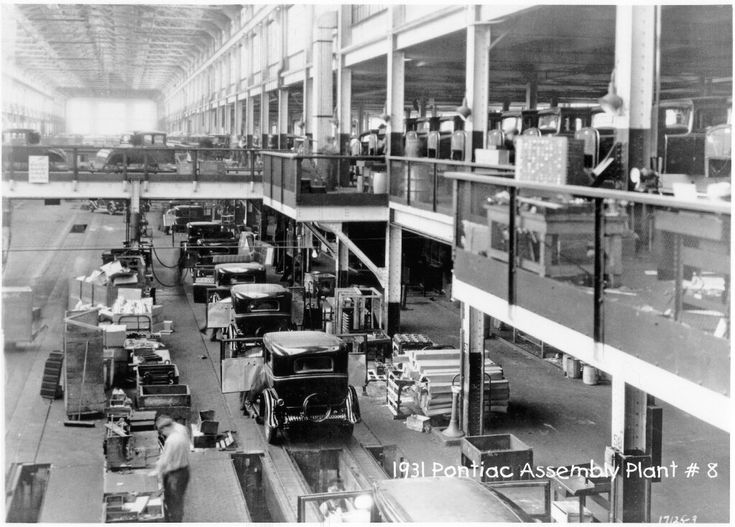
1931 Pontiac assembly plant.
The Pontiac nameplate officially entered production on Dec. 28, 1925. Around the same time, The New York Times published one of its first announcements introducing the new Pontiac automobile to the American public. The first Pontiac models, sold as 1926 vehicles, were designated as the 6-27 Series and quickly earned a reputation for offering six-cylinder performance at a price comparable to many four-cylinder automobiles.
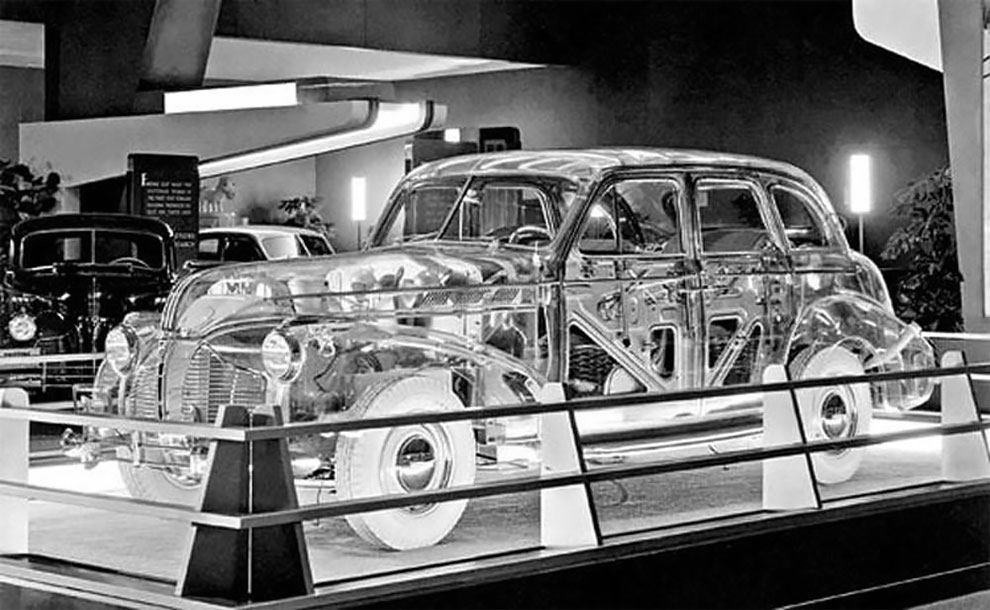
1939 Pontiac Deluxe See-through display model.
The 1930s brought the hardships of the Great Depression, a difficult period for both American families and the nation's automobile manufacturers. After several years of production alongside Pontiac, the Oakland nameplate was discontinued following the 1931 model year, leaving Pontiac as General Motors' sole companion marque in that market segment.
Following World War II, Pontiac introduced automobiles with a bolder, fresher appearance, including styling that incorporated the headlights into the front fenders. Civilian automobile production resumed on Sept. 13, 1945, as the American auto industry shifted from wartime production back to consumer vehicles. Pontiac continued to manufacture attractive and dependable automobiles, and the completely redesigned 1949 models were well received as demand for new cars surged across the United States.
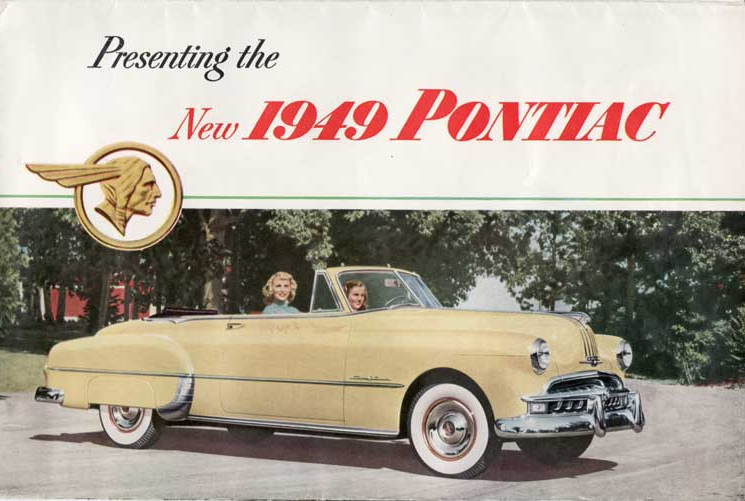
1949 Pontiac advertising -Yellow convertible.
The 1950s brought another era of stylish automobiles from the Pontiac Division, and consumers responded enthusiastically. In 1959, Pontiac reportedly hired more than 3,000 additional assembly-line workers and added another factory shift to help meet growing consumer demand.
By the late 1950s, General Motors had become the world's largest industrial corporation, and the Pontiac nameplate was among the leaders in the American automotive market. The 1960s ushered in significant styling and engineering advancements. The compact Pontiac Tempest debuted for the 1961 model year, followed by the sporty Grand Prix in 1962 with a base price of $3,490. Pontiac built 30,195 Grand Prix models for the 1962 model year, making it an immediate success. During this period, Pontiac also commissioned artists Art Fitzpatrick and Van Kaufman to create the memorable advertising illustrations that remain highly admired by collectors and enthusiasts today.
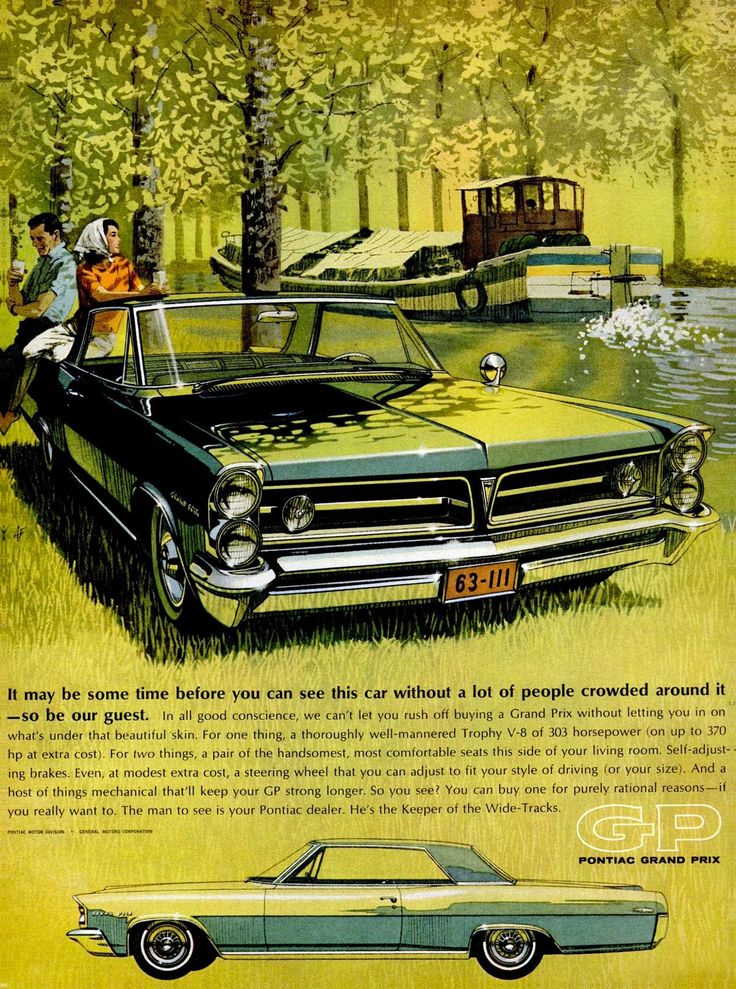
1963 Pontiac Grand Prix advertising.
Pontiac's popularity continued to grow throughout the 1960s. The division became a familiar presence on television through its sponsorship of The Smothers Brothers Comedy Hour during the late 1960s. In 1964, Pontiac introduced the legendary GTO, a model that quickly became a favorite among younger buyers and helped launch the muscle car era. The GTO Judge followed for the 1969 model year, adding even more excitement to Pontiac's performance lineup.
In 1967, Pontiac introduced the Firebird, its new sporty coupe built alongside the Chevrolet Camaro at General Motors' Norwood, Ohio, assembly plant and the Lordstown assembly plant produced the Chevrolet Vega beginning in 1970. Much of Pontiac's success during the 1960s can be credited to the leadership of John Z. DeLorean, whose influence helped shape iconic models such as the GTO, Firebird, Grand Prix and, later, the Trans Am.
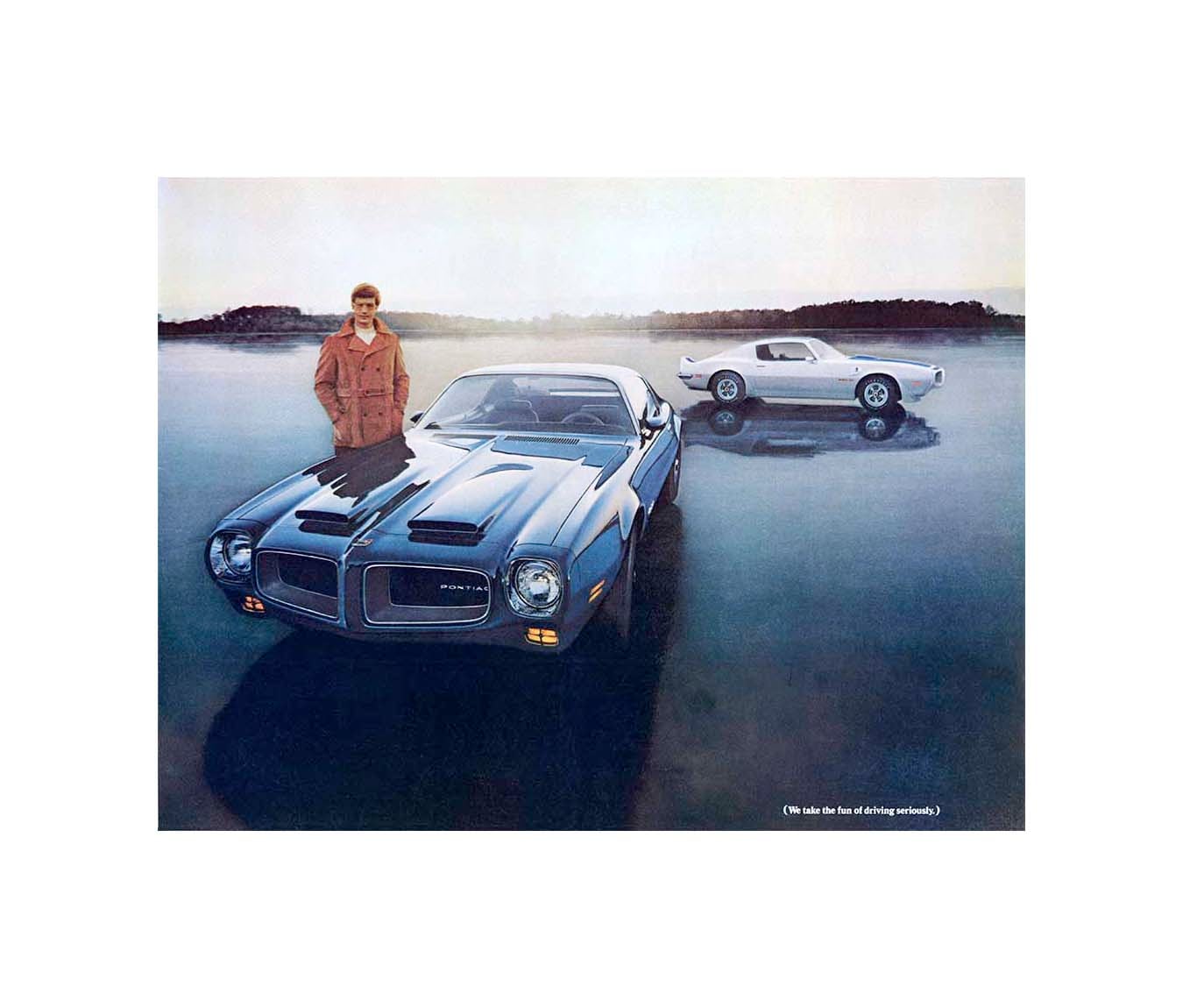
1970 Pontiac Firebird advertising.
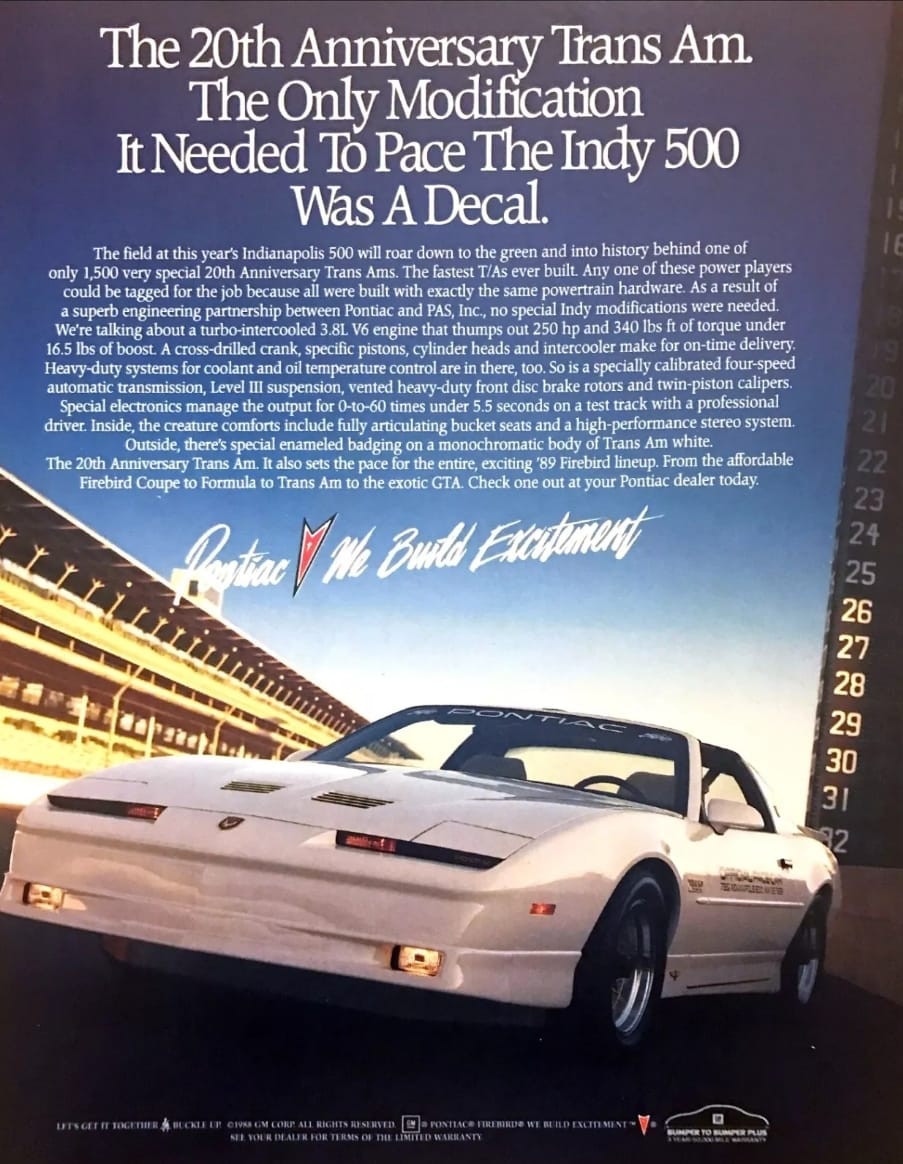
Pontiac Trans Aim advertising.
Throughout the 1970s and 1980s, Pontiac models continued to sell well in the automotive marketplace and remain highly popular among collectors and enthusiasts today.
The Pontiac-Oakland Club International celebrated its 100th anniversary convention June 22-27, 2026. For more information about the history and heritage of the Pontiac nameplate, contact the Pontiac-Oakland Club International at 763-479-2111.
Bibliography
Gunnell John. “75 Years of Pontiac Oakland” Crestline Publishing 1982.
Bonsall E. Thomas. “Pontiac, They Built Excitement” The story of an American Automobile Company, 1926 to 1992 Story Run Press 1991.
The Day in Automotive History. “Why did Pontiac Disappear? The fall of an American Brand” April 27, 2009.