



By A. Wayne Ferens
Edited by MotorCities National Heritage Area Staff
Published 07.29.26
For decades, automobile manufacturers have developed innovative ways to display and showcase the unique features and special designs built into their latest models. After all, a great deal of work goes into the design, engineering, and testing of an automobile and each of its components. So why not show them to prospective buyers?
In 1938, General Motors collaborated with Rohm and Haas, the chemical company that had recently developed Plexiglas, the world's first commercially produced transparent acrylic sheet. GM wanted something special for its "Highways and Horizons" exhibit at the 1939 and 1940 New York World's Fair. Rohm and Haas constructed an exact replica of a 1939 Pontiac Deluxe Six body using Plexiglas in place of the outer sheet metal.
Plexiglas was developed during the 1930s as a result of Rohm and Haas' work with acrylic plastics and laminated safety glass. During World War II, Plexiglas was widely used by the military for aircraft windows, canopies, periscopes, gun turrets, and bomber nose sections because of its strength, light weight, and optical clarity. In the years that followed, the automotive industry took full advantage of the material for both production vehicles and concept cars.
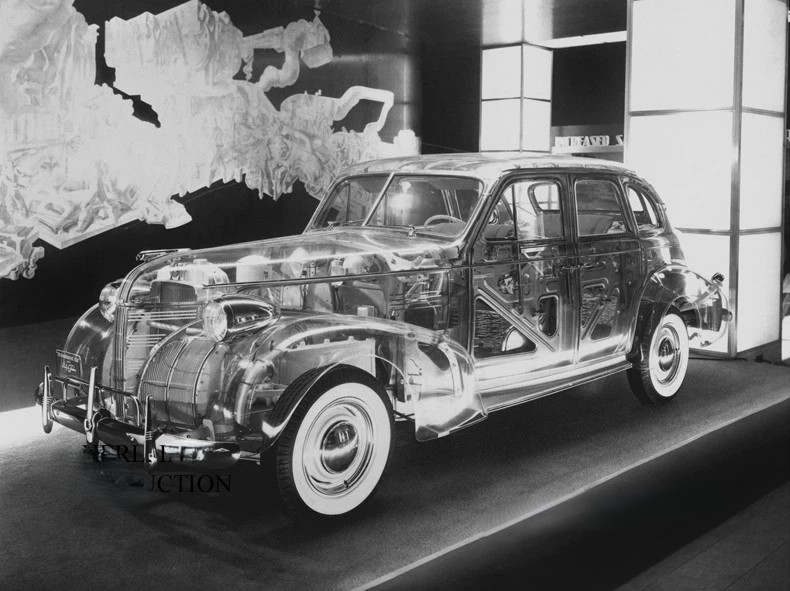
The "Ghost Car," as it was sometimes known, was a huge success at the World's Fair. It later toured dealerships across the nation and appeared at auto shows. GM had a second Plexiglas Pontiac constructed on a Torpedo Eight chassis for display at the 1940 Golden Gate International Exposition in San Francisco. The original 1939 Pontiac Deluxe Six still survives, and the cost to build it was about $25,000.
Photos: Ferens collection
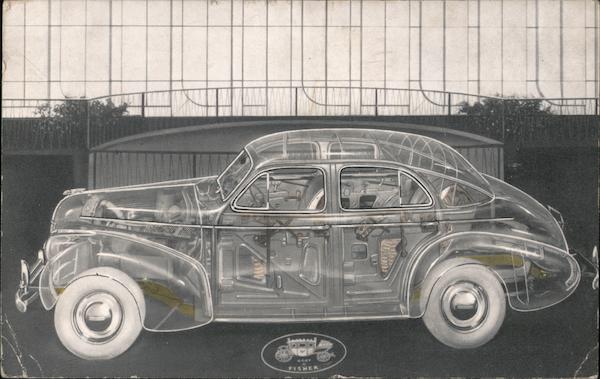
The Pontiac Torpedo Eight displayed at the 1940 Golden Gate International Exposition was the second Plexiglas car. Like the first, its transparent exterior revealed the structural and mechanical components that were ordinarily hidden from view. Chrome and copper plating, along with bronze and enamel finishes, made the various operating parts easy to identify. And, of course, it was a Body by Fisher.
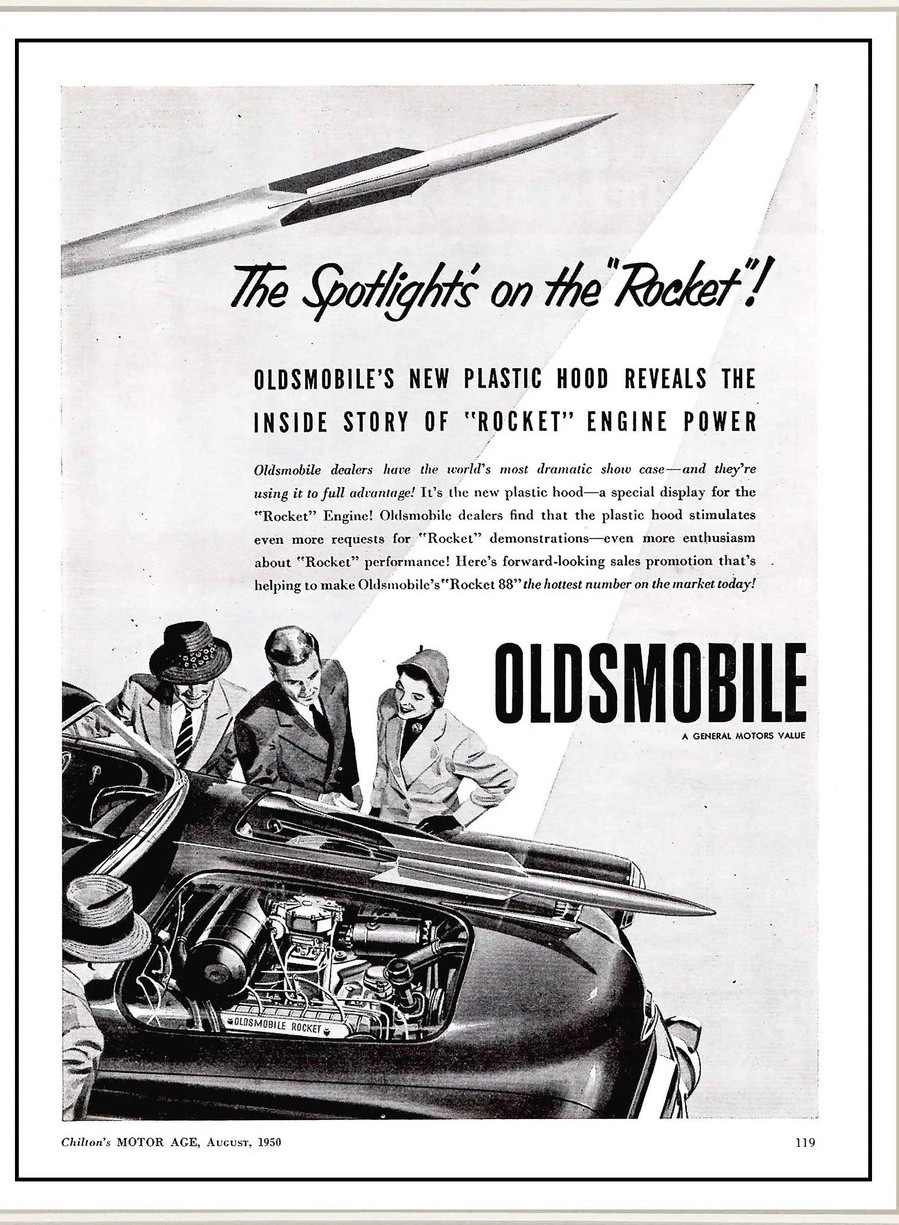
The first time I saw Plexiglas used this way was during a visit to our local Oldsmobile dealer in Pittsburgh with my father in 1950. Sitting on the showroom floor was a beautiful Oldsmobile Rocket 88 coupe with two clear Plexiglas panels in the hood, allowing customers to see the new 303 cubic inch overhead valve V8 engine, rated at 135 horsepower, without opening it. Wow! What a sight.
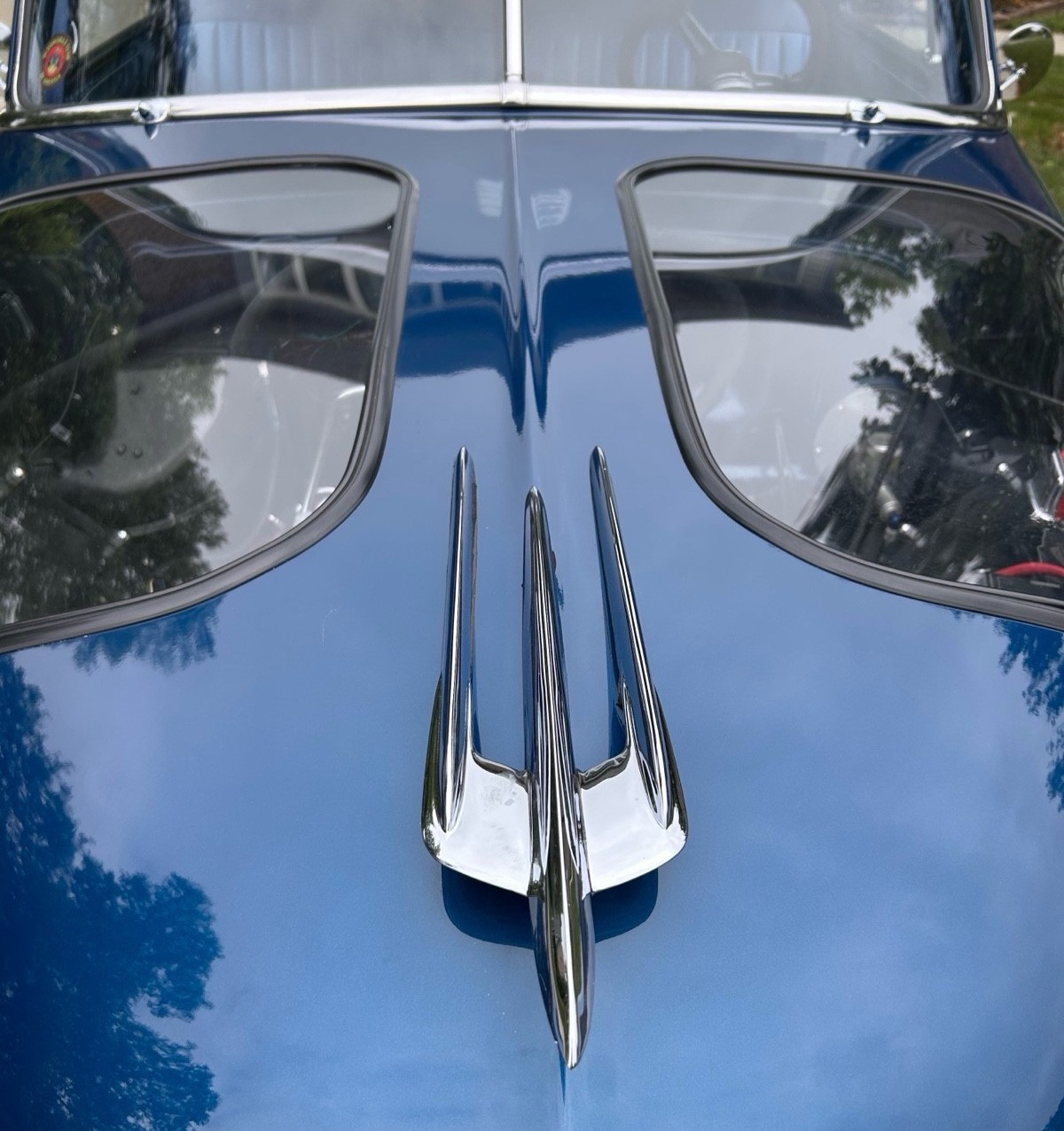
Oldsmobile was the first automaker to use these "demonstrator hoods," and quite a few were shipped to dealerships across the country. The exact number produced is unknown, and they were originally intended for display rather than sale. Customers loved the concept, however, some of the hoods remained on the cars when they were delivered to their new owners. Oldsmobile also featured the demonstrator hoods in its advertising for the 1949 through 1951 models.
Photos: Ferens collection
When Ford introduced its new 239 cubic inch overhead valve Y block V8 engine for the 1954 model year, the company wanted to show it off. Taking a page from General Motors, Ford offered Plexiglas "demonstrator hoods" to dealers that wanted them. Most were installed on the top-of-the-line Crestline Skyliner hardtop, which featured a tinted Plexiglas roof panel and was promoted as the "most distinctive car under the sun."
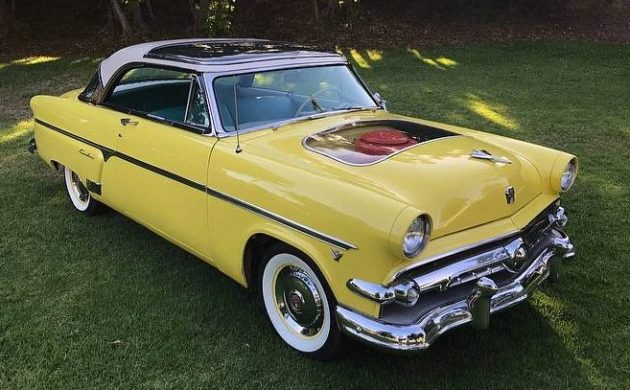
Dealers and customers loved the Plexiglas hood, and 107 eventually ended up on cars that were sold to the public. Not all of them were installed on the hardtop, however. Some were fitted to Crestline Sunliner convertibles, which were among Ford's most popular models of the 1950s. The Sunliner remained in production through the 1956 model year. In 1957, Ford introduced the Fairlane 500 Skyliner with its innovative retractable hardtop.
The 1955 model year was also a milestone for General Motors, which built its 50 millionth vehicle, a Chevrolet Bel Air Sport Coupe. To mark the occasion, GM assembled three specially built two door coupes. Each was finished in a custom mixed shade of gold, featured a matching gold interior, and included more than 600 pieces of trim and hardware plated in 24 karat gold. It has long been rumored that one of the cars was equipped with a Plexiglas demonstrator hood to showcase Chevrolet's all new 265 cubic inch overhead valve V8 engine.
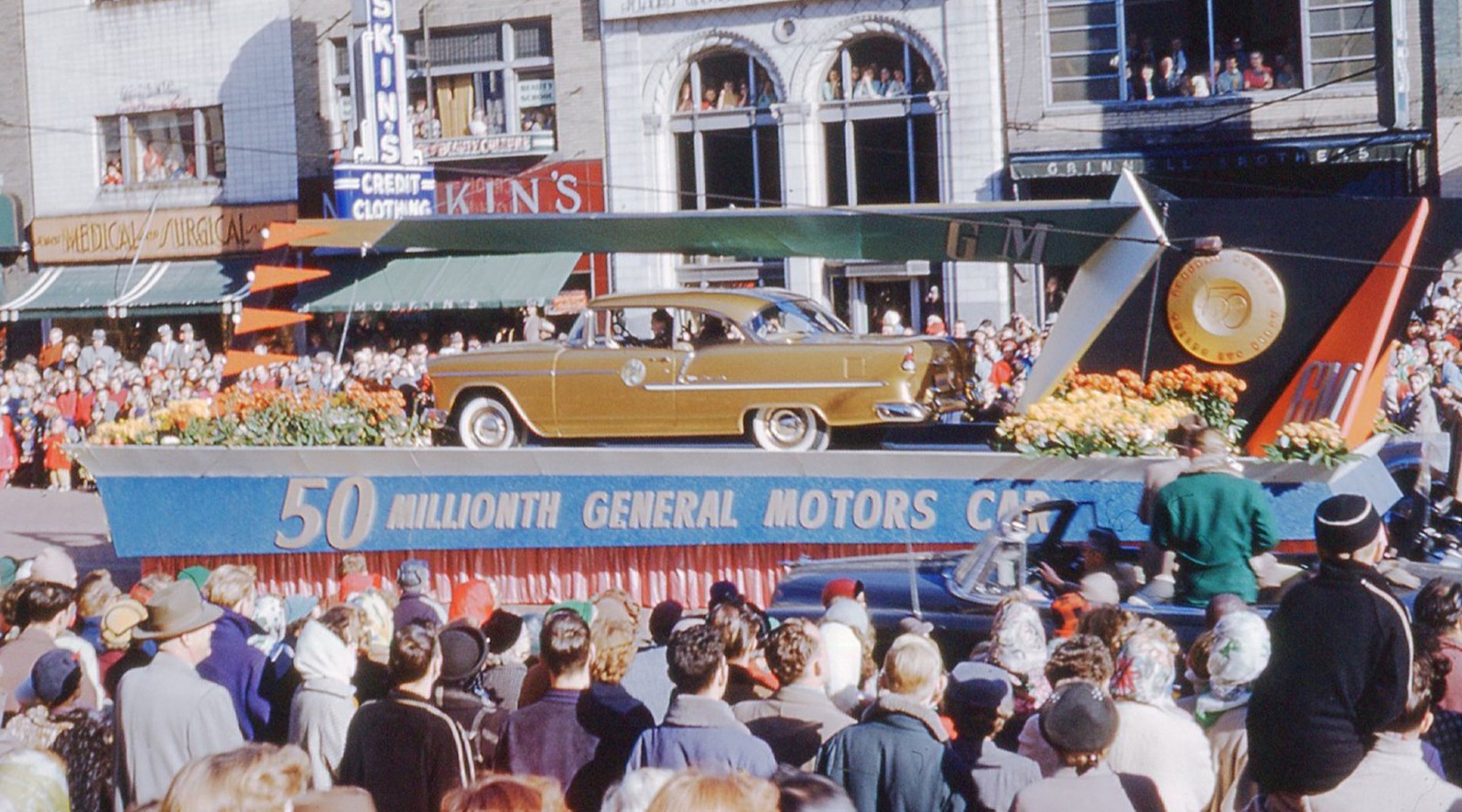
The three "Golden Chevrolets" were displayed at special General Motors corporate events, promotional appearances, movies, parades, and auto shows across the country. None of the three cars is known to exist today, although a few pieces from one of them have survived. Chevrolet also provided dealers with Plexiglas demonstrator hoods, much like Ford did, but the total number produced is unknown.
The Chevrolet Corvair, produced from 1960 through 1969, was a compact car known for its innovative design. It featured a rear mounted, air cooled engine and a lightweight unibody structure. To highlight its unique powertrain, Chevrolet supplied dealers with a Plexiglas engine lid for the 1960 model year. Only one was issued to each dealership.
Photo: GM Archives
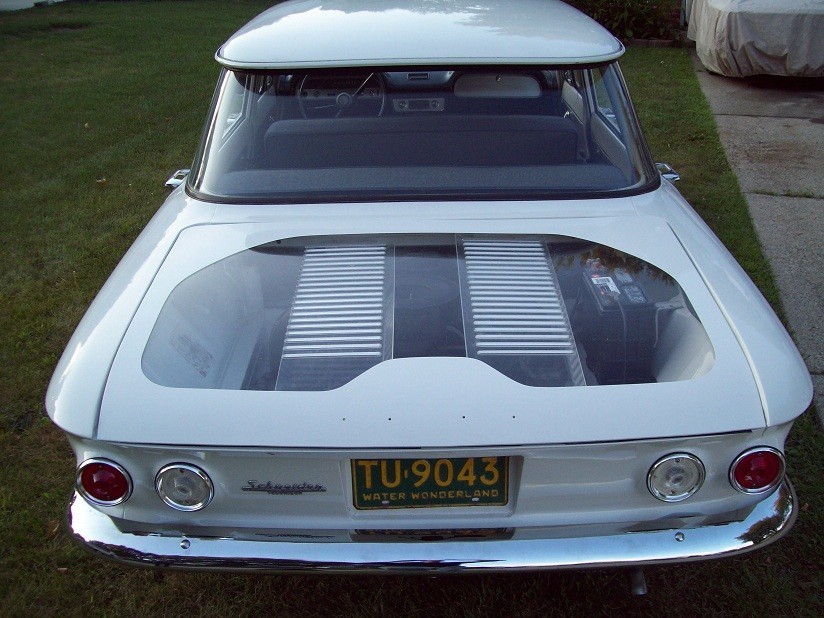
These engine covers were intended for showroom display only and even included a light to illuminate the engine compartment. They occasionally turn up for sale on the collector market.
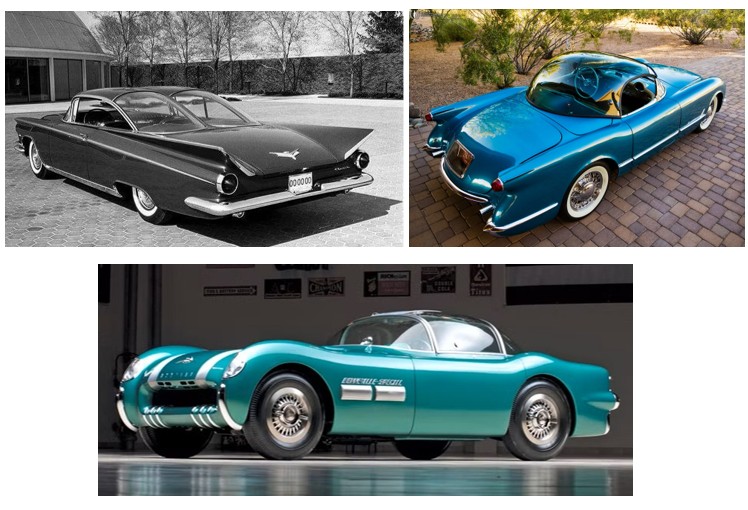
Another use for this acrylic material was on the concept cars developed for General Motors' Motorama. Motorama showcased concept cars and production vehicles from GM's various divisions. The traveling exhibition toured cities across the country from 1949 through 1961.
Photos: Ferens collection
Some of the most popular concepts included the 1954 Corvette Corvair Concept with its bubbletop roof, the Pontiac Bonneville Special with its bubbletop design, and the 1959 Buick Skylark "Double Bubbletop." GM produced five tinted bubbletop roofs for Corvette show cars. These vehicles were extremely popular at Motorama exhibitions throughout the United States, attracting millions of visitors to the displays.
The Chevrolet Vega was a subcompact automobile manufactured and marketed from 1970 through 1977. In 1975, Chevrolet introduced a limited production, high performance version called the Cosworth Vega (RPO Z09), which featured an all aluminum 122 cubic inch double overhead camshaft, electronic fuel injected inline four cylinder engine. The twin cam, 16 valve cylinder head with hemispherical combustion chambers was designed by Cosworth Engineering of the United Kingdom.
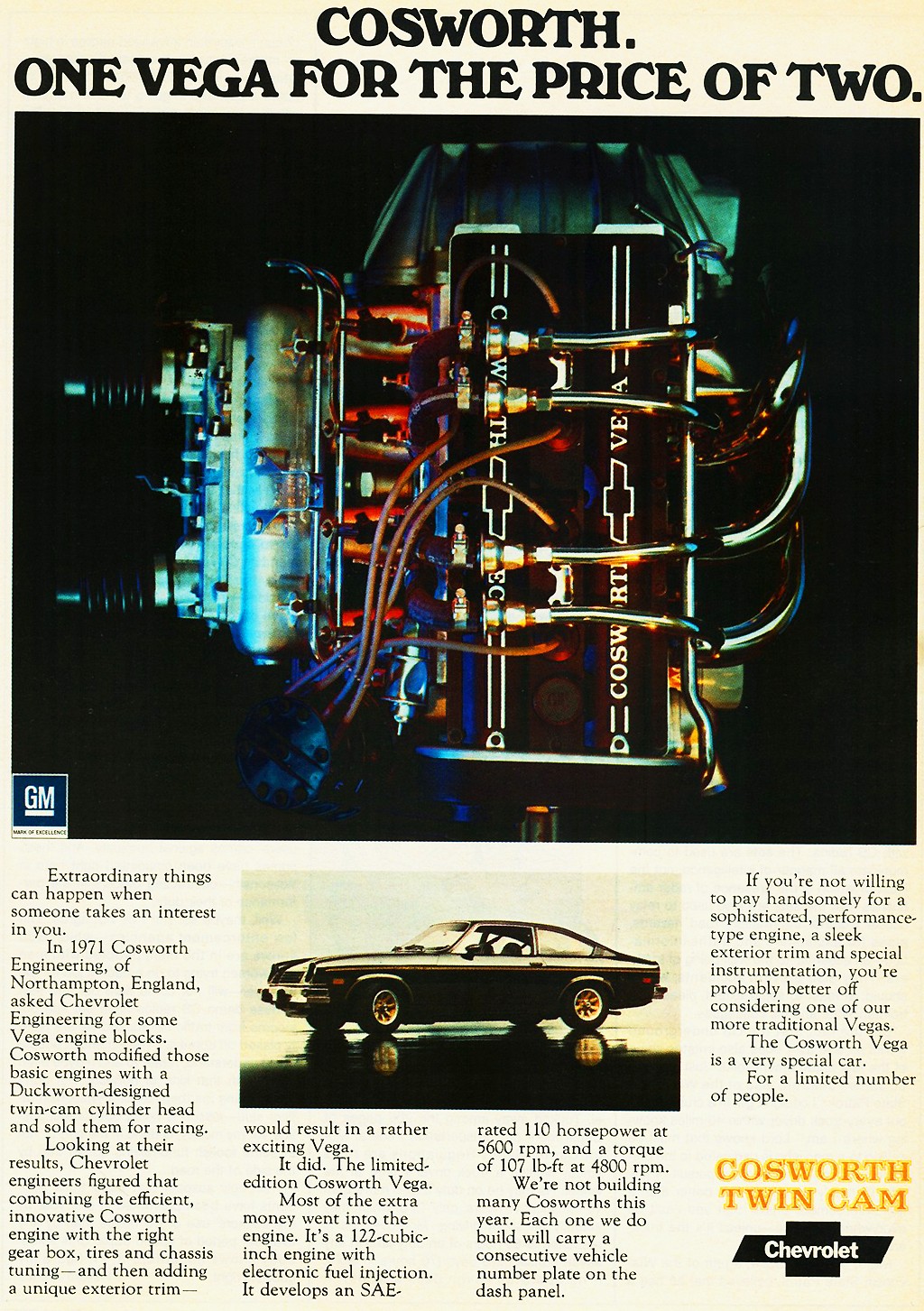
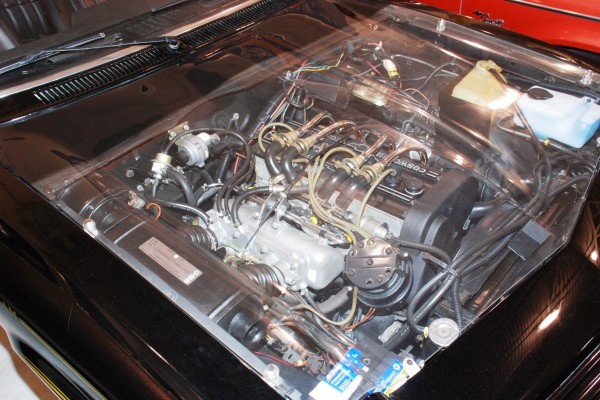
A total of 3,508 Cosworth Vegas were produced for the 1975 and 1976 model years, but only three were fitted with a full clear acrylic Plexiglas hood. One of those cars was Cosworth Vega No. 001, which was retained at the GM Technical Center in Warren, Michigan.
On Nov. 22, 1963, President John F. Kennedy was assassinated in Dallas while riding in a 1961 Lincoln Continental presidential limousine. Soon afterward, the limousine was returned to Hess and Eisenhardt for extensive modifications that included approximately 1,600 pounds of armor plating, a protected fuel tank, run flat tires, and bullet resistant glass.
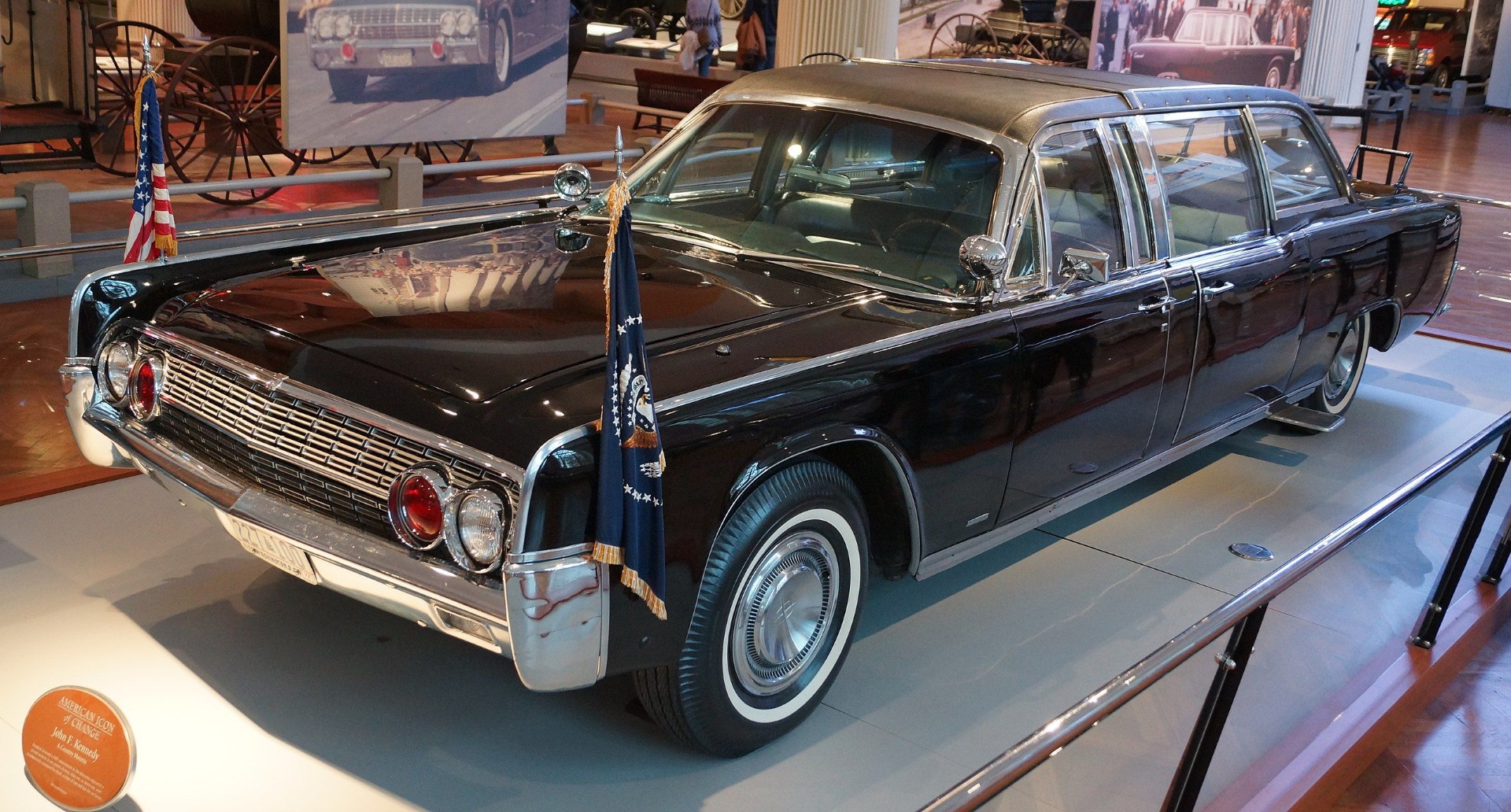
A unique fixed acrylic and glass enclosure replaced the original sectional roof and became one of the largest curved pieces of bullet resistant glass ever produced for an automobile. The presidential limousine is now part of The Henry Ford collection in Dearborn, Michigan.
Today, Plexiglas and other acrylic materials remain important in commercial and military applications because of their durability, light weight, and optical clarity.
Bibliography:
GM Archives
Otto Rohm biography.
History of Rohm and Haas
GM sales brochures
Ford sales literature