



By: Robert Tate, award-winning automotive historian and researcher
Images courtesy of GM Heritage Archives & Special Collections.
Edited by MotorCities National Heritage Area Staff
Published 10.1.2026
The 1974 and 1975 Corvette models were great-looking automotive designs that many Americans thoroughly enjoyed. These Corvettes were part of the iconic C3 generation, a design era strongly influenced by the late Bill Mitchell, who was General Motors' design chief during the development of the Corvette's distinctive styling. Mitchell's influence on Corvette design during this period is well documented by the National Corvette Museum.
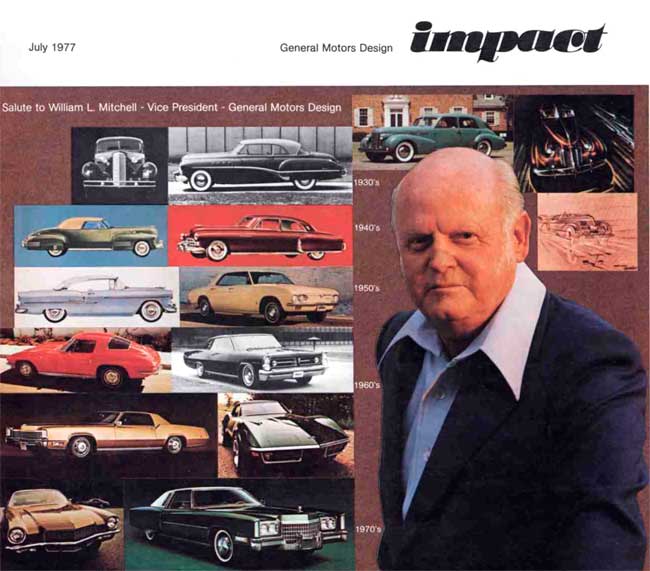
General Motors Design Bill Mitchell.
For the 1974 model year, Chevrolet produced 37,502 Corvettes. Production increased slightly in 1975, when 38,465 Corvettes were built. The cars offered features such as power steering, power brakes and four-speed manual transmissions, along with the performance and styling that Corvette buyers had come to expect.
The early 1970s were a period of major change for the American automobile industry. The 1973 oil crisis and the federal government's evolving safety and emissions requirements were beginning to influence the way American cars were designed and engineered. The Arab oil embargo began in October 1973 and contributed to a major energy crisis in the United States. At the same time, federal bumper standards were changing the appearance and construction of American automobiles. Federal Motor Vehicle Safety Standard No. 215 took effect for passenger cars beginning with the 1973 model year and established low-speed impact requirements for bumper systems.
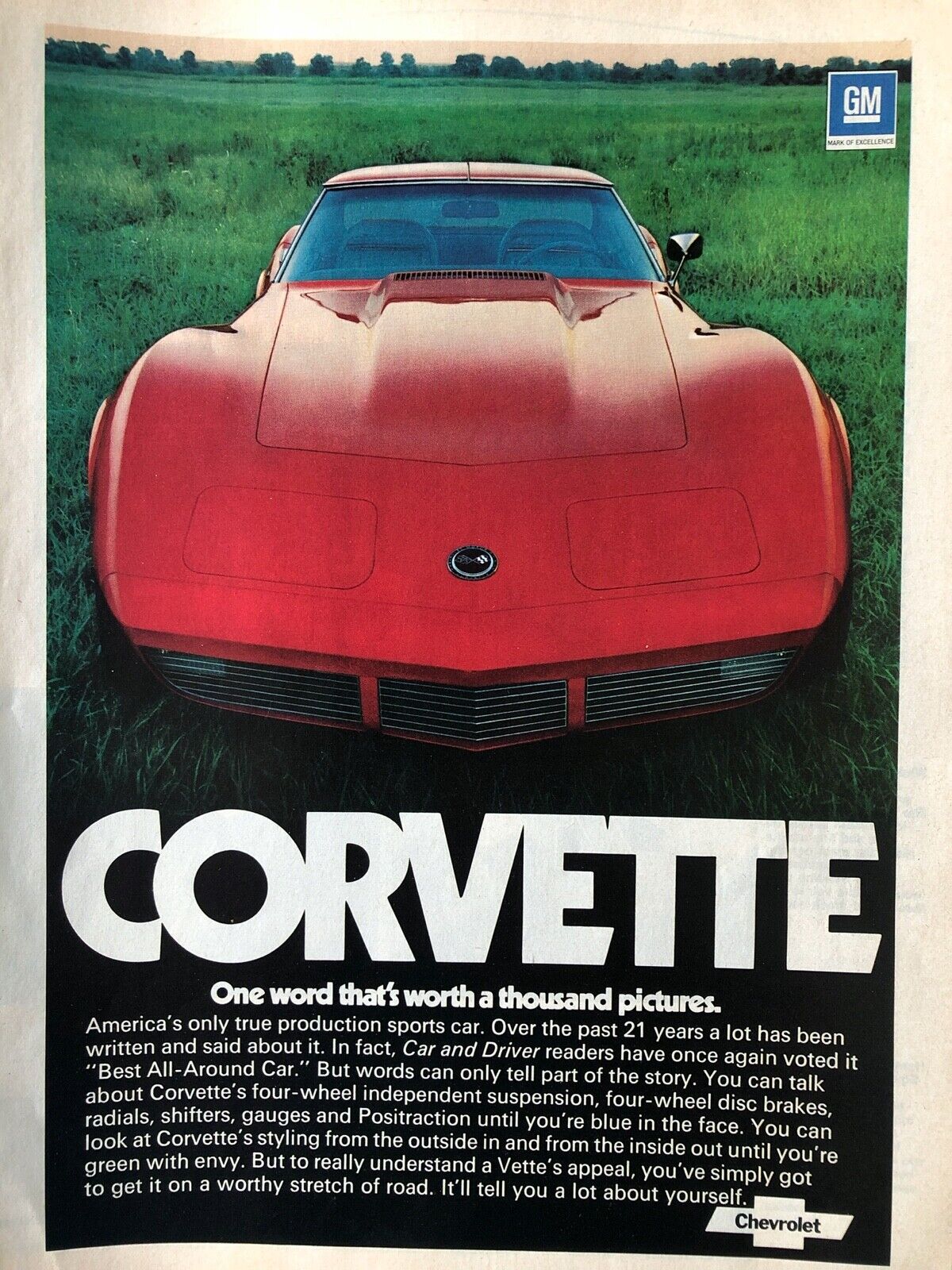
Corvette advertising.
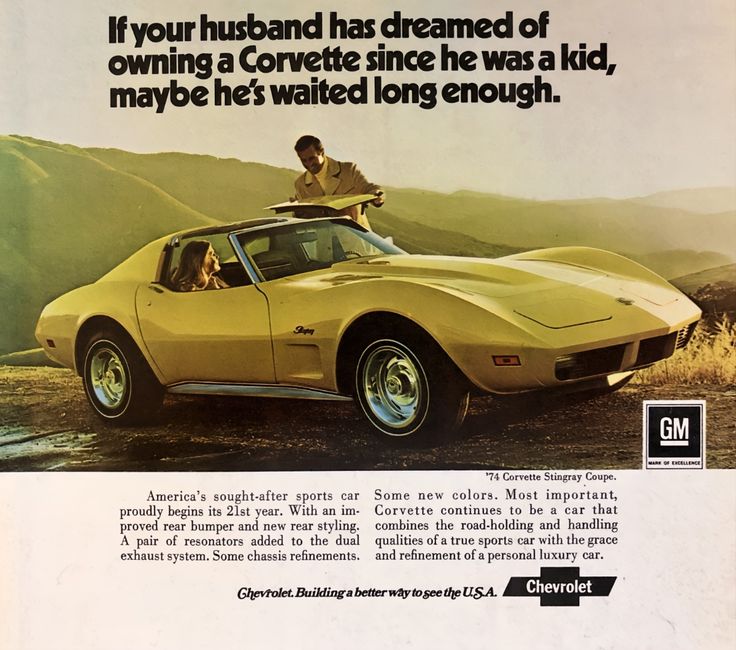
1974 Corvette advertising yellow model featured.
The 1974 Corvette was an important year because it marked the final appearance of the 454-cubic-inch big-block engine in the Corvette. The National Corvette Museum records 3,494 big-block Corvettes produced in 1974, making the model an important part of the end of the big-block era.
The 1974 Corvette also completed the transition to urethane bumpers. The 1973 model had introduced the urethane front bumper while retaining a chrome rear bumper. For 1974, the rear bumper was also changed to a body-colored urethane design. The 1974 rear bumper was distinctive because it used a two-piece cover, a feature unique to that model year.
The 1974 Corvette designs remained very close to the previous year's styling, but the changes gave the car a slightly different appearance. The long, sleek body, flared fenders and dramatic proportions continued to give the C3 Corvette a strong presence on the road. For many Corvette enthusiasts, this was part of what made the car so memorable.
It is worth noting that 1974 was not Corvette's 50th anniversary. Corvette celebrated its 50th anniversary with the 2003 model year. The 25th anniversary was celebrated in 1978.
Still, the 1974 Corvette represented an important moment in Corvette history. It was the last year for the 454 big-block and the last Corvette produced without a catalytic converter. The coupe also received integrated shoulder and lap belts.
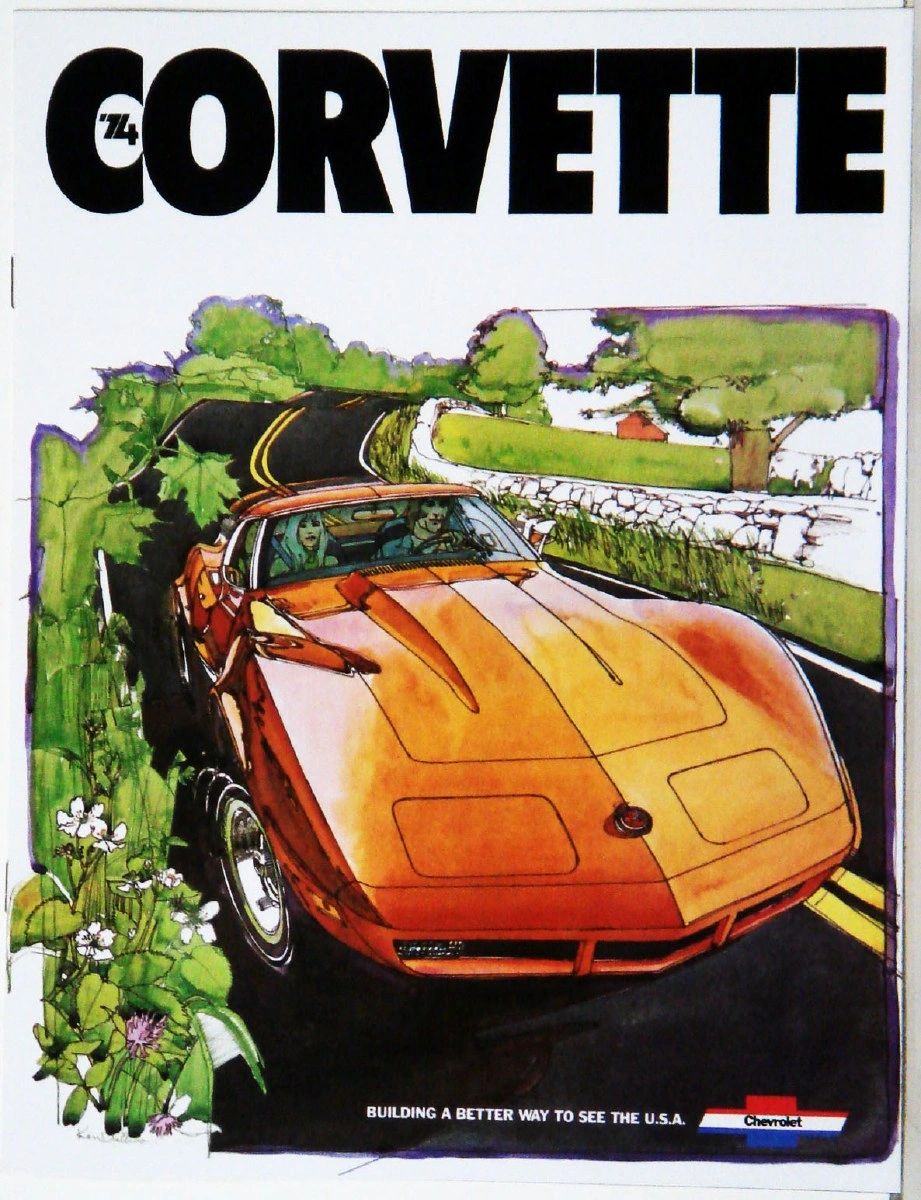
Corvette colorful illustration orange.
Corvette advertising during this period also reflected the emotional appeal of the car. One 1974 advertisement spoke directly to the person who had dreamed about owning a Corvette since childhood. That kind of advertising connected the Corvette with the idea of fulfilling an American automotive dream. Chevrolet understood that the Corvette was more than transportation. It represented style, freedom and performance to many of its customers.
The 1975 Corvette offered only modest exterior changes from the 1974 model, but mechanically it represented another important step in the changing automotive industry. The 454-cubic-inch engine was gone, leaving the 350-cubic-inch V8 as the available displacement. The 1975 Corvette also introduced high-energy ignition and a catalytic converter as the industry moved toward stricter emissions requirements.
The 1975 model year was also significant because it marked the end of the Corvette convertible for more than a decade. Chevrolet produced 4,629 convertibles in 1975, while total Corvette production reached 38,465 units. The convertible would not return until the 1986 model year.
That 4,629 convertible figure is sometimes misunderstood. It was not the total number of Corvettes produced in 1975. It represented the number of convertibles built that year. The remaining 33,836 were coupes.
The 1975 Corvette also reflected the changing expectations of the American automobile buyer. Emissions requirements, fuel concerns and safety regulations were becoming increasingly important. Yet Chevrolet continued to produce a Corvette that retained the dramatic styling and personality that enthusiasts expected from America's sports car.
Some Corvette enthusiasts have referred to the C3 generation as the "Shark" era because of its distinctive shape and the influence of the earlier Mako Shark design studies. The C3's styling continued to give the Corvette a dramatic presence that separated it from many other American cars of the period. The National Corvette Museum has documented Bill Mitchell's important role in bringing the Mako Shark design influence into the production Corvette.
The Corvette's place in popular culture also continued to grow during this period. Over the decades, Corvettes have appeared in numerous movies and television programs, becoming an important part of America's automotive culture. General Motors has noted the Corvette's extensive history in film, television and popular culture.
When I look back at the 1974 and 1975 Corvettes, I see two model years that represented a turning point. These cars still carried the dramatic styling and personality that made the Corvette special, but they were also adapting to a rapidly changing automotive world.
The 1974 Corvette closed the door on the big-block era while introducing the full urethane bumper design. The 1975 model continued that evolution with new emissions equipment, high-energy ignition and the final C3 convertible.
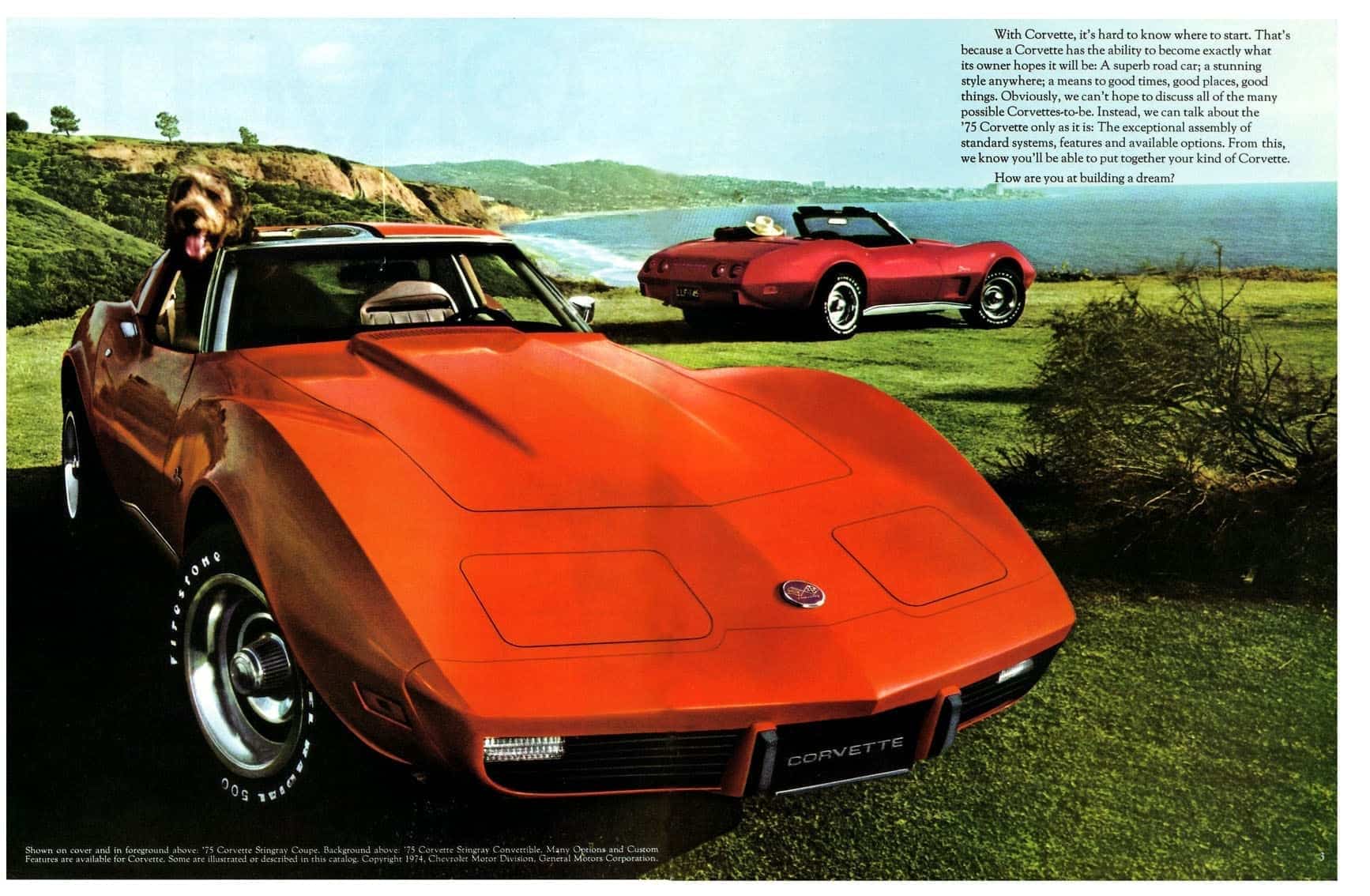
1975 Corvette two red models featured in advertising.
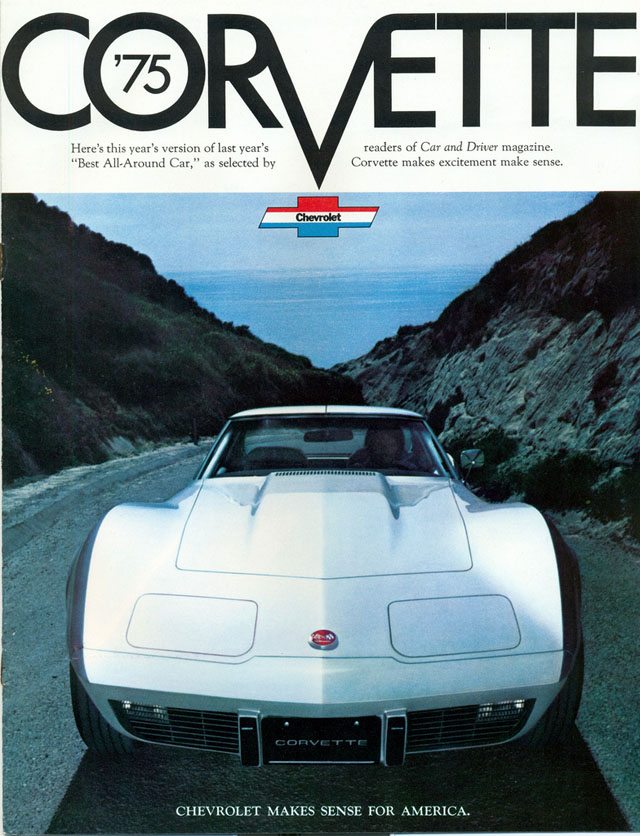
1975 Corvette silver sales material.
For many Corvette enthusiasts, the 1974 and 1975 models remain memorable because they combined the unmistakable C3 "Shark" styling with the realities of a changing America. They represent a time when the automobile industry was being asked to do things differently, yet Chevrolet continued to give Corvette buyers a sports car with presence, personality and unmistakable American character.
In conclusion, the 1974 and 1975 Corvette models will always have an important place in automotive history. They may have arrived during a difficult period for the American automobile industry, but they continued the Corvette tradition while adapting to a new era. For me, that is part of what makes these Corvettes so interesting. They remind us that automotive history is not only about horsepower and styling. It is also about how great cars evolve when the world around them changes.
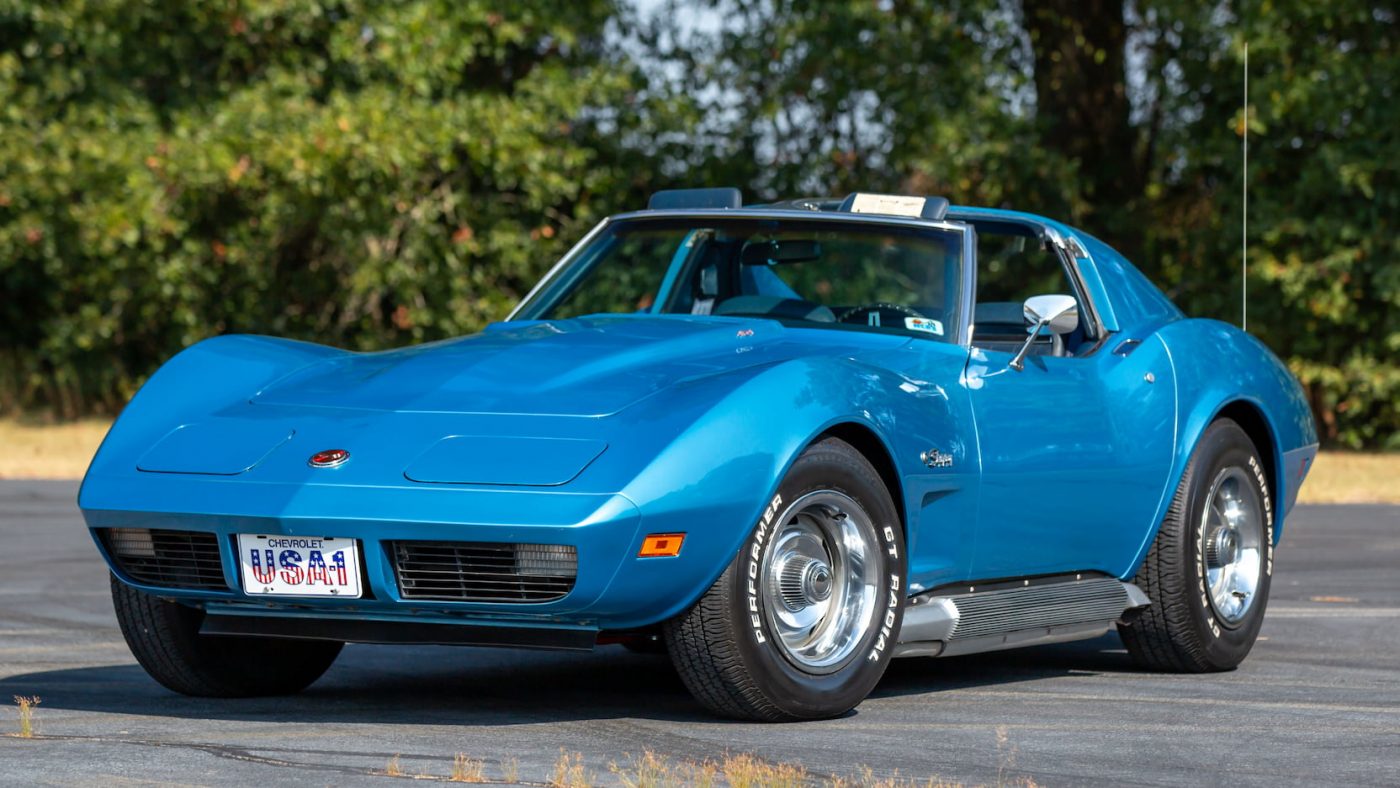
Corvette in metallic blue USA-1 image.
Bibliography
Weber Louis. “Corvette America’s only true sports car” By the Editors of Consumer guide. Winter 1979 Volume 215.
Kowalke Ron. “Standard catalog of Chevrolet 1912-1998” Krause Publications Second Edition 1998.
Vette Vues. “1974 Chevrolet Corvette Celebrating 50 years of a Timeless Beauty” The Corvette enthusiast magazine. Corvette history.
By the Auto Editors of consumer guide. “Corvette 50th Anniversary” Publications International 2003.
National Corvette Museum: 1974 Corvette collection information
National Corvette Museum: Bill Mitchell biography
National Corvette Museum: Henry Haga and Corvette design history
Corvette Action Center: 1974 production and specifications
Corvette Action Center: 1975 production information
U.S. Department of Energy: 1973 oil crisis timeline
National Highway Traffic Safety Administration: Federal bumper standard history
U.S. Department of State, Office of the Historian: 1973-74 oil embargo
GM News: Corvette in film, television and popular culture
National Corvette Owners Guide