
By A. Wayne Ferens
Images courtesy of Ferens collection and Mike's Carwash.
Edited by MotorCities National Heritage Area Staff
Published 08.26.2026
Like today, in the earliest days of automobile ownership, people took pride in showing off their new purchase. After all, shelling out $600-900 or more for a new car was truly a luxury that few could afford. Unfortunately, keeping that new car spick-and-span was an almost impossible task, no matter what part of the country you lived in or traveled through.
In major cities, many roads were little more than packed dirt streets, while motoring in rural areas could be challenging, to say the least. When the rain came, hundreds of pounds of mud and dirt could collect underneath, on and inside a vehicle, taking hours to clean. People naturally looked for ways to ease the toil and pain of keeping their automobiles “mud free.”
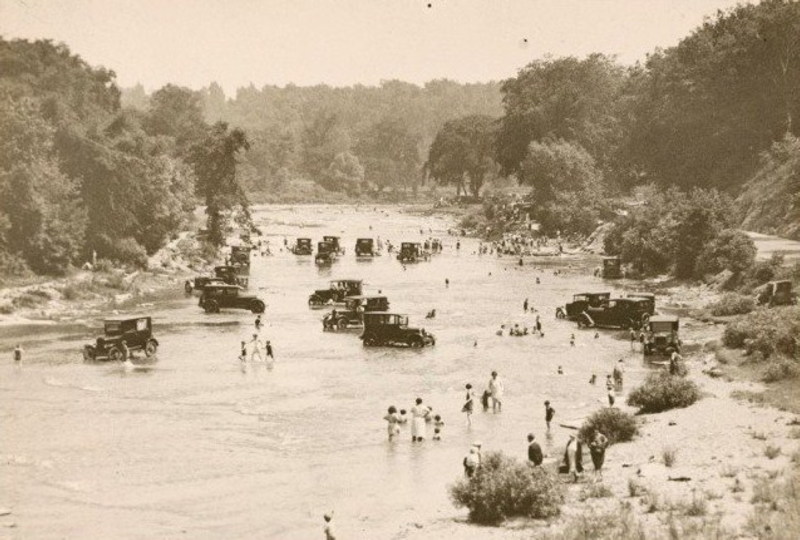
Not only could you have fun swimming and cooling off with your friends and neighbors, but you could also wash your car by simply driving into the cool, flowing waters of a local stream or river. This rural scene was a common occurrence. Besides, cisterns and wells provided only a limited supply of water that had to be conserved.
The Automobile Laundry
The professional car wash business emerged soon after the automobile became a part of everyday American life. The International Carwash Association traces early commercial auto laundries to the first decade of the 20th century, including an operation in San Francisco by 1907. Detroit soon became an important center of the developing industry. By 1913 or 1914, an Automobile Laundry was operating in Detroit, an early example of the production-line approach that would help shape the car wash industry.
The Detroit operation is commonly associated with J.W. Hinkle and Frank McCormick. Despite the name, this original car wash was anything but automated. Cars were manually pushed through a series of stations, where workers handled the different stages of the cleaning process. The concept had an assembly-line feel that echoed the manufacturing revolution taking place throughout Detroit at the time.
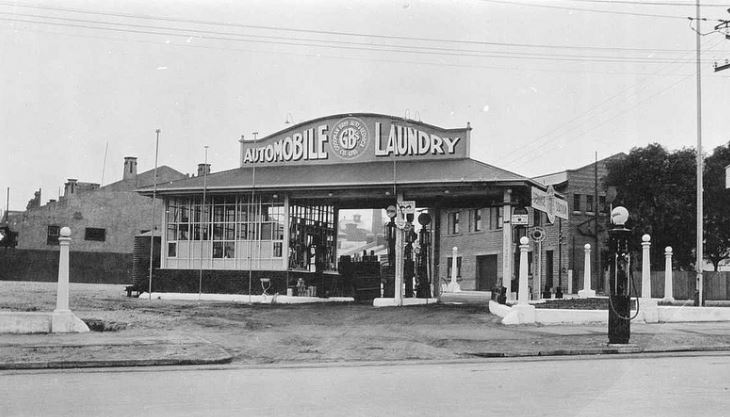
It all started in Detroit more than a century ago with Automobile Laundry, helping establish a business model that would eventually become a familiar part of American life.
The Auto Wash Bowl
In the 1920s, the Neway Auto Cleaning & Service Corporation in Chicago developed the Auto Wash Bowl. The facility featured gently sloping ramps for easy entrance and exit. Automobiles drove around the bowl while corrugations in the bottom helped loosen mud and grime from the tires and undercarriage.
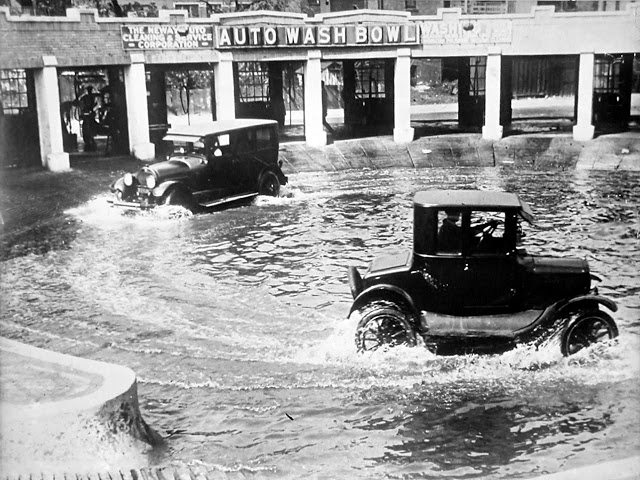
After several laps around the wash bowl, the vehicle was driven into a stall, where workers completed the job by washing and drying the car by hand.
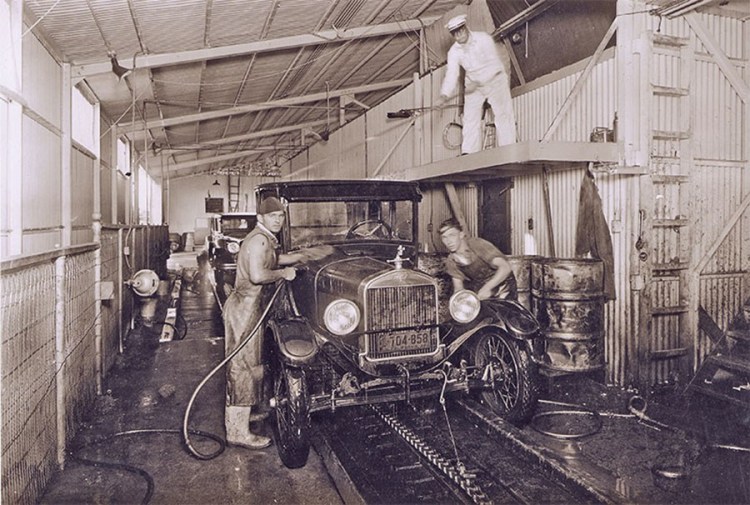
Other early automobile laundry entrepreneurs experimented with conveyor systems to move cars through the hand-washing process. An endless chain was connected to the vehicle, allowing it to be pulled through the facility while attendants washed the car. A button was pressed, the car began to move, and the cleaning process continued from station to station. Note the roof scrubber in the white uniform.
The Road to Automation
Commercial car washes remained labor-intensive for decades. A major change came in 1940, when an automatic conveyor-style car wash opened in Hollywood, California. A winch pulled vehicles through the wash, but workers still performed most of the actual cleaning.
In 1946, Thomas Simpson developed a semiautomatic system that incorporated an overhead sprinkler, a conveyor, manually operated brushes and a 50-horsepower air blower. The system automated portions of the process, but attendants were still required to do much of the washing.
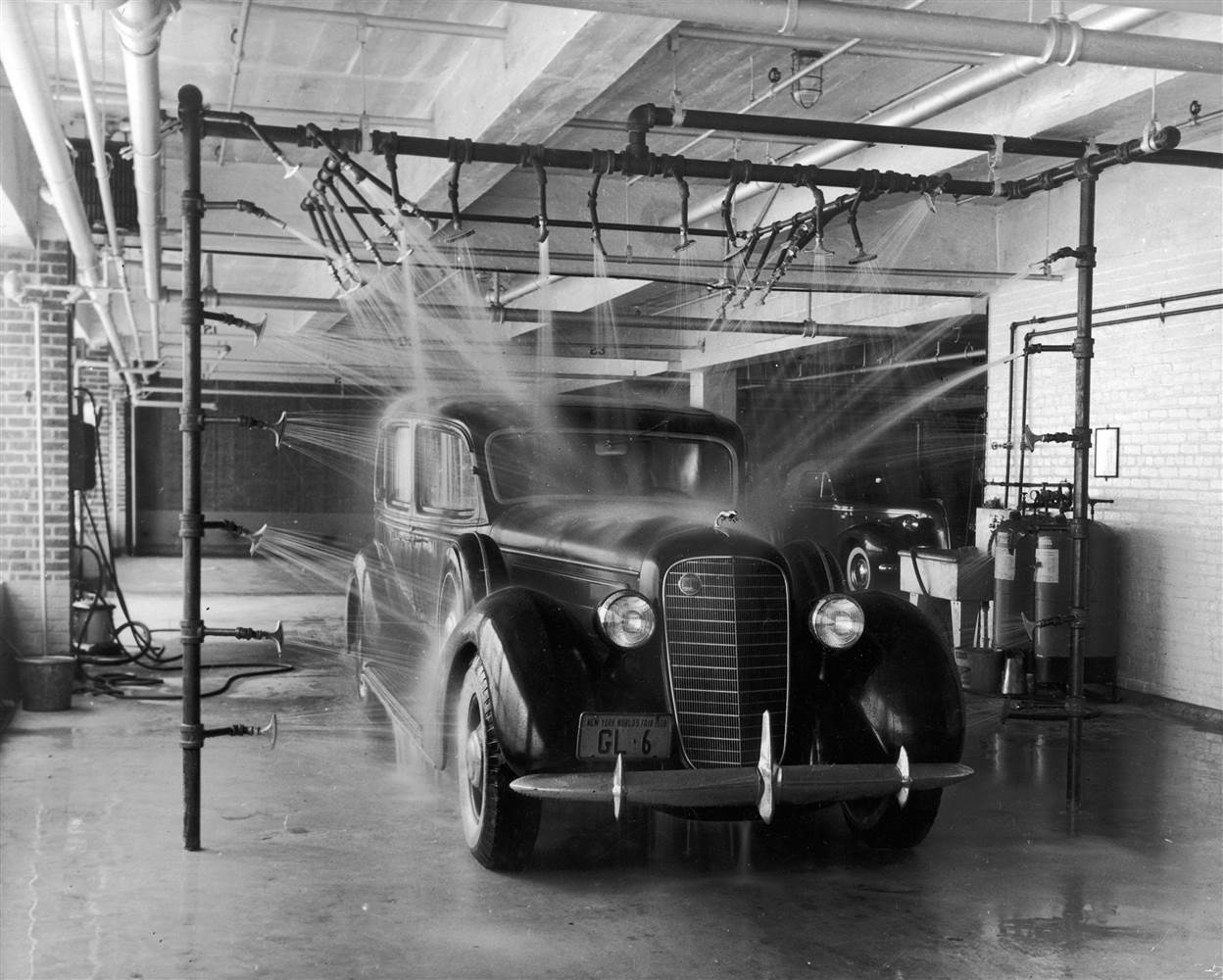
That same year, Leo Rousseau founded Minit-Man, an important early car wash equipment company. Rousseau's equipment was used by Paul Maranian at Paul's Automatic Auto Wash in Detroit. The facility is widely recognized by the International Carwash Association as the first fully automatic car wash, marking a major turning point in the industry.
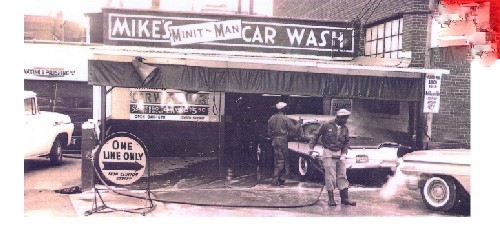
In 1948, Joe Dahm used Rousseau's equipment to open Mike's Minit Man Car Wash in Indiana. The business would eventually grow into a major regional car wash operation.
From a small operation in Indiana, Mike's would grow into a large car wash chain operating under the Mike's Carwash and Crew Carwash names.
The Anderson Brothers
In 1951, Seattle-based brothers Dean, Archie and Eldon Anderson took automation another step forward. Their system used multiple spray nozzles to apply soap and rinse the vehicle, along with automated brushes to remove dirt and grime. A 50-horsepower blower helped finish the drying process. Their system is generally credited as the first hands-free automatic car wash.
Dan Hanna Changes the Industry
In 1955, Dan Hanna Sr. opened his first Rub-A-Dub car wash in Milwaukie, Oregon, after becoming fascinated by a car wash he had seen while vacationing in Mexico. Hanna quickly realized that faster and more efficient equipment would be needed as the industry grew.
In 1959, Hanna developed a working model of a mechanized car-washing system and began installing his equipment in other car washes. During the 1960s, Hanna Enterprises became a major innovator and manufacturer of car wash equipment. Among Hanna's influential developments were the wraparound brush, roller-on-demand conveyor, soft-cloth friction washing, tire-washing systems and water-recirculation technology.
Hanna Enterprises eventually became one of the world's leading manufacturers of conveyorized vehicle-wash equipment.
Building an Industry
As the technology improved, so did the business itself. The American Auto Laundry Association emerged in the 1950s as operators began sharing ideas and information. The organization eventually evolved into today's International Carwash Association, or ICA.
The industry has continued to change with consumer habits and new technology. According to the ICA, professional car washing has become increasingly popular, with nearly 80% of U.S. drivers now reporting that they most frequently have their vehicles washed at a professional car wash. ICA estimates North American car wash retail sales at approximately $15 billion.
Modern car washes have also placed greater emphasis on water conservation and efficiency. Water-reclamation systems allow facilities to reuse water during portions of the wash process, reducing freshwater consumption. An ICA study found that reclaim systems can significantly reduce the amount of freshwater required for professional vehicle washing.
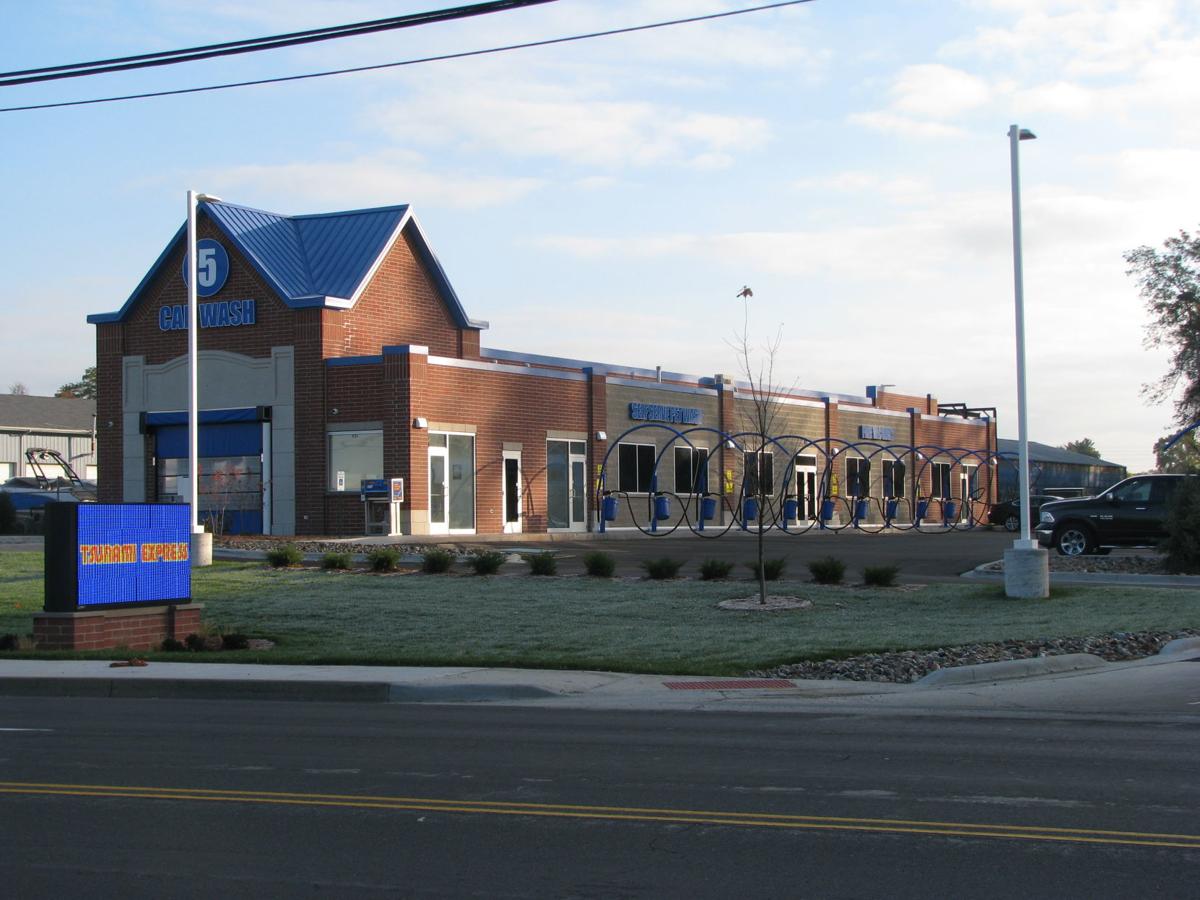
This modern 4,922-square-foot, 150-foot-long automated car wash recently opened in Mount Pleasant, Wisconsin. The building's length allows room for additional equipment, including hot-wax and tire-shining systems. There are 26 vacuum cleaners, two pay stations and a looping drive that allows vehicles to stack while waiting.
Convenience Then and Now
From the very first automobile laundries, it was all about convenience. More than a century later, that basic idea has not changed.
Today, drivers can pay with cash, credit cards and mobile apps. Many car washes also offer wash clubs and subscription services, allowing drivers who take pride in a clean car to return regularly without having to pay for each visit individually.
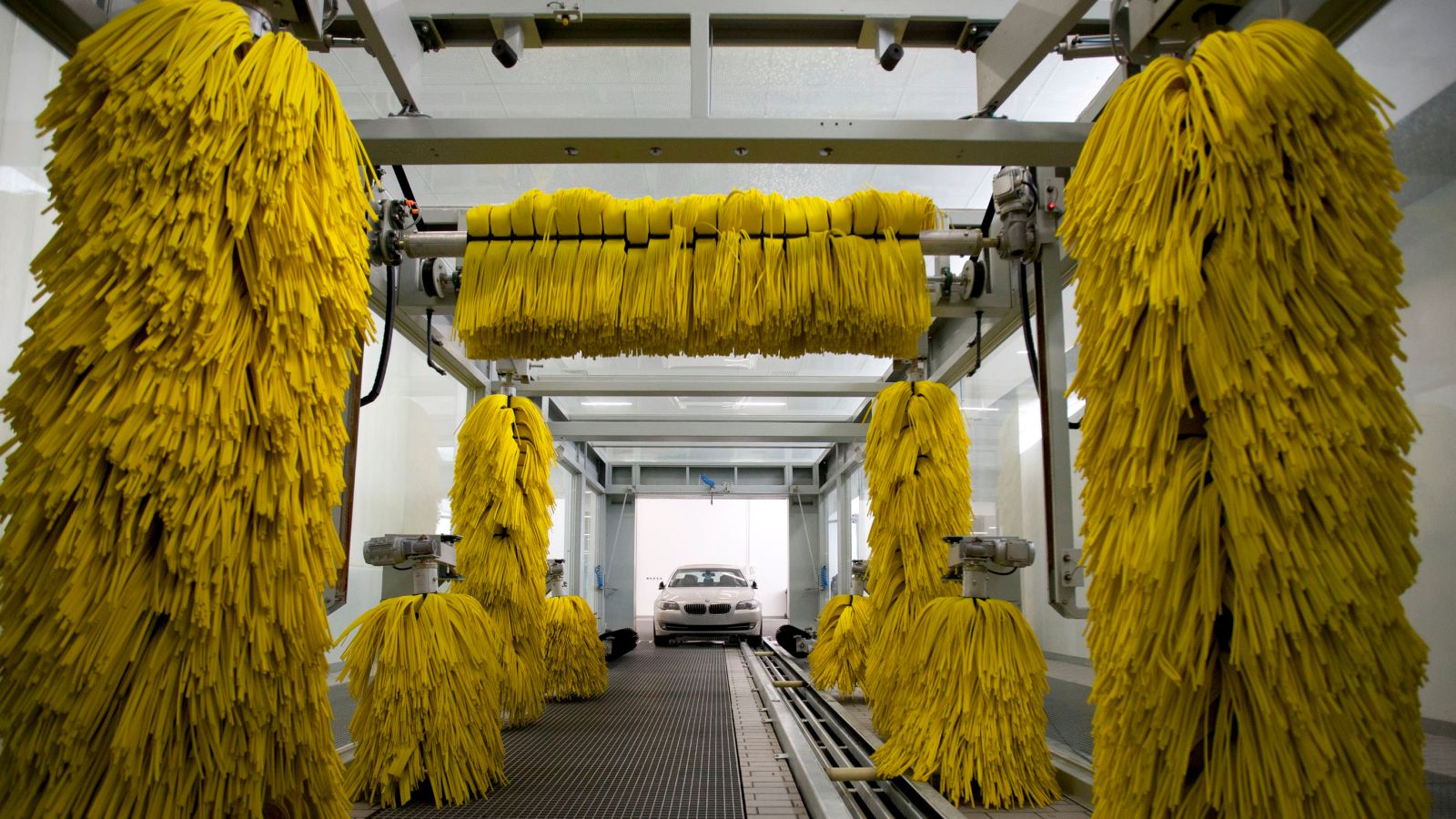
Technology has certainly changed the way we wash our automobiles, but the goal remains the same as it was more than a century ago: get the dirt off, make the car shine and get back on the road. And that certainly beats pulling out the garden hose or looking for a local stream.
Bibliography:
International Carwash Association
Carwash.com
Car Wash Industry Stats and Trends 2017
Business Plans Volume 07
Hannacarwash.com
ColemanHanna.com
PatentlyHistorical.com