


By A. Wayne Ferens
Images courtesy of Ferens collection and Chrysler Corp.
Edited by MotorCities National Heritage Area Staff
MotorCities Story of the Week
When Michigan-born designer Virgil Exner joined Chrysler Corporation in 1949, following earlier stints at General Motors and Studebaker, he took charge of the company's Advanced Design Studio. Throughout the automotive industry, many carryover designs of the postwar years were considered old-fashioned and outmoded. Their boxy, conservative styling was beginning to lose its appeal.
The 40-year-old Exner was convinced that popular aerospace design themes, including missile and aircraft shapes, tapered noses, lower rooflines and tailfins, could give automobiles a more streamlined appearance. He believed these elements would create greater design flexibility while giving consumers a more stylish automobile.
Exner also believed his ideas would be an easy sell because he saw a natural kinship between automotive and aircraft design. As it turned out, convincing Chrysler management was no easy task. Eventually, however, he gained greater influence over the company's design direction at its Highland Park headquarters.
Chrysler was preparing an entirely new lineup for the 1955 model year, including Chrysler, Dodge, Plymouth, DeSoto and Imperial. Exner's design philosophy placed considerable emphasis on tailfins. He appreciated their visual impact and believed they offered aerodynamic benefits. His team also explored the effects of automotive shapes through wind tunnel testing. What Chrysler introduced as the Forward Look in 1955 would become one of the most recognizable styling movements in American automotive history.
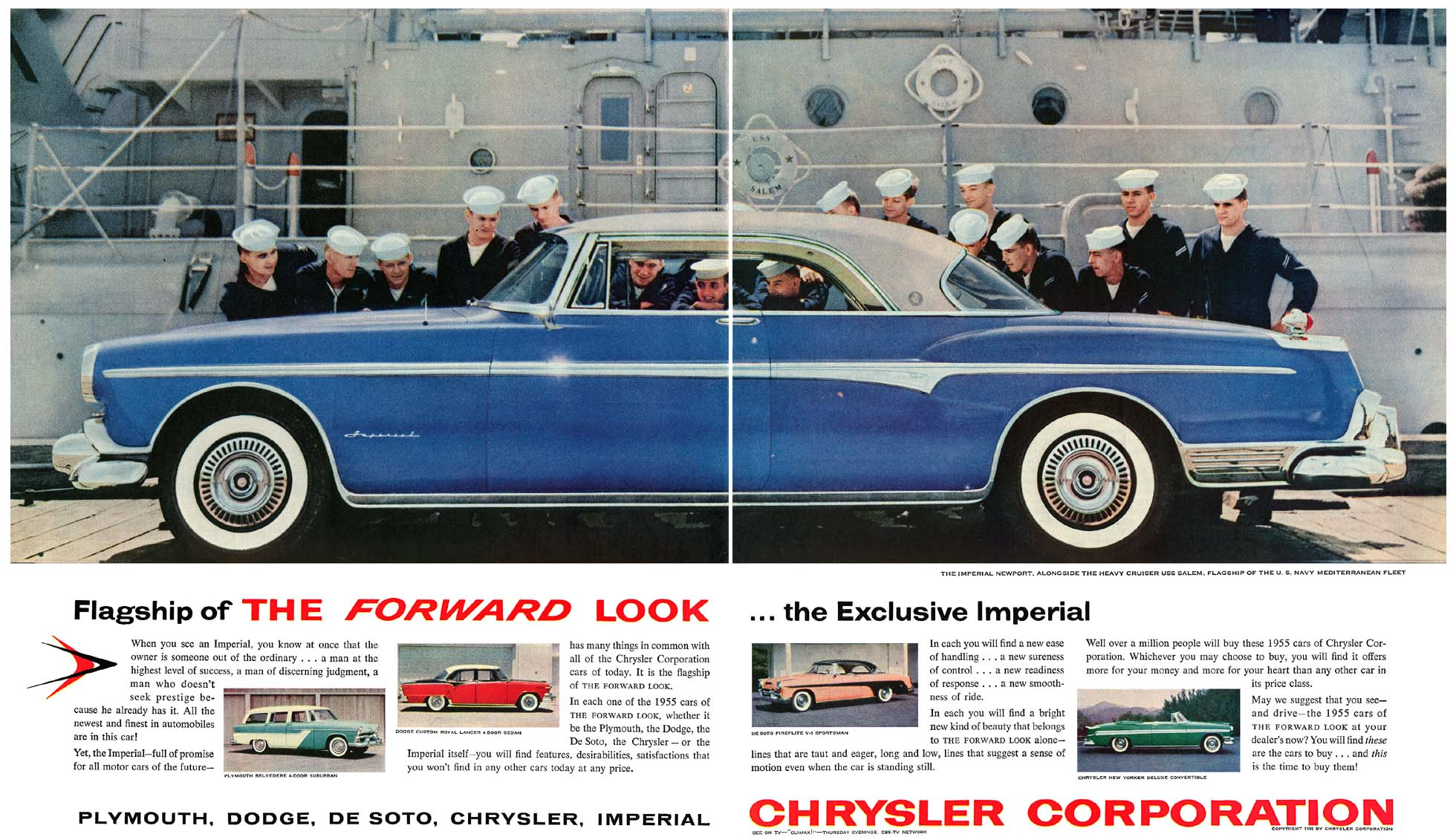
Magazine ad from Chrysler Corporation.
The new Imperial, now marketed as a separate make, was naturally the flagship of the Forward Look for 1955. The new look was in no way radical - that would come later - but was considerably sleeker and more stylish than what had gone before.
The Flookerang became the recognizable emblem of Chrysler Corporation's new Forward Look styling campaign. It was featured prominently in the company's advertising and promotional materials.

The 1956 Chrysler 300B was visually similar to the 1955 C-300 but received a revised tailfin design. Its 354-cubic-inch Hemi V-8 produced 340 horsepower in standard form, with an optional high-compression version rated at 355 horsepower. Paired with a three-speed automatic transmission, the 300B was among the fastest American production cars of its day. It was also one of the most attractive automobiles of the Jet Age.
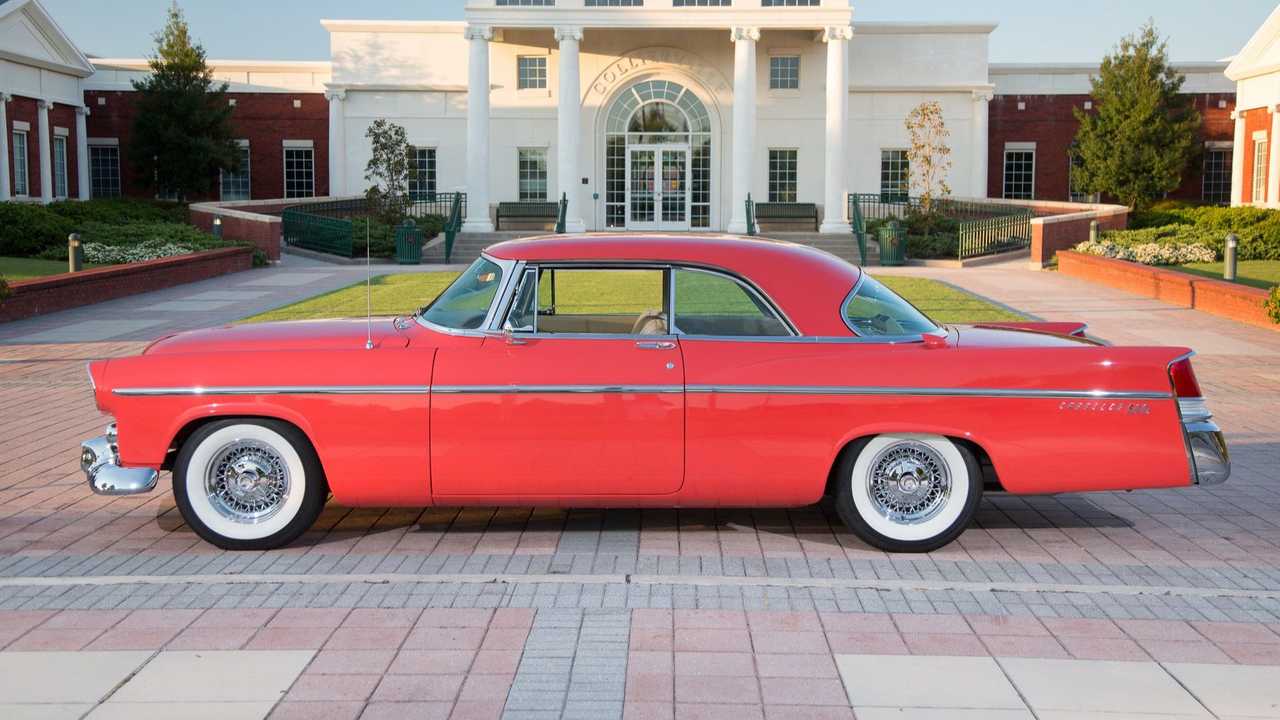
Photo from the Ferens collection.
The 1957 model year took Chrysler's Forward Look to another level. The dramatic new styling was catching on with consumers, and Chrysler enjoyed a significant sales rebound. Its share of the U.S. automobile market reached approximately 19.5 percent in 1957. The Forward Look was becoming a major part of the company's identity, making Virgil Exner one of the most influential names in American automotive design.
The 1957 models were lower, longer and wider, with elegant, towering fins sweeping off the rear quarters. Exner lowered the rooflines and gave the cars a sleeker, smoother and more aggressive appearance. The rooflines were simple and elegant, with thin A- and C-pillars that helped provide exceptional outward visibility. Hardtop versions also featured compound-curved glass, contributing to the expansive appearance of the greenhouse.
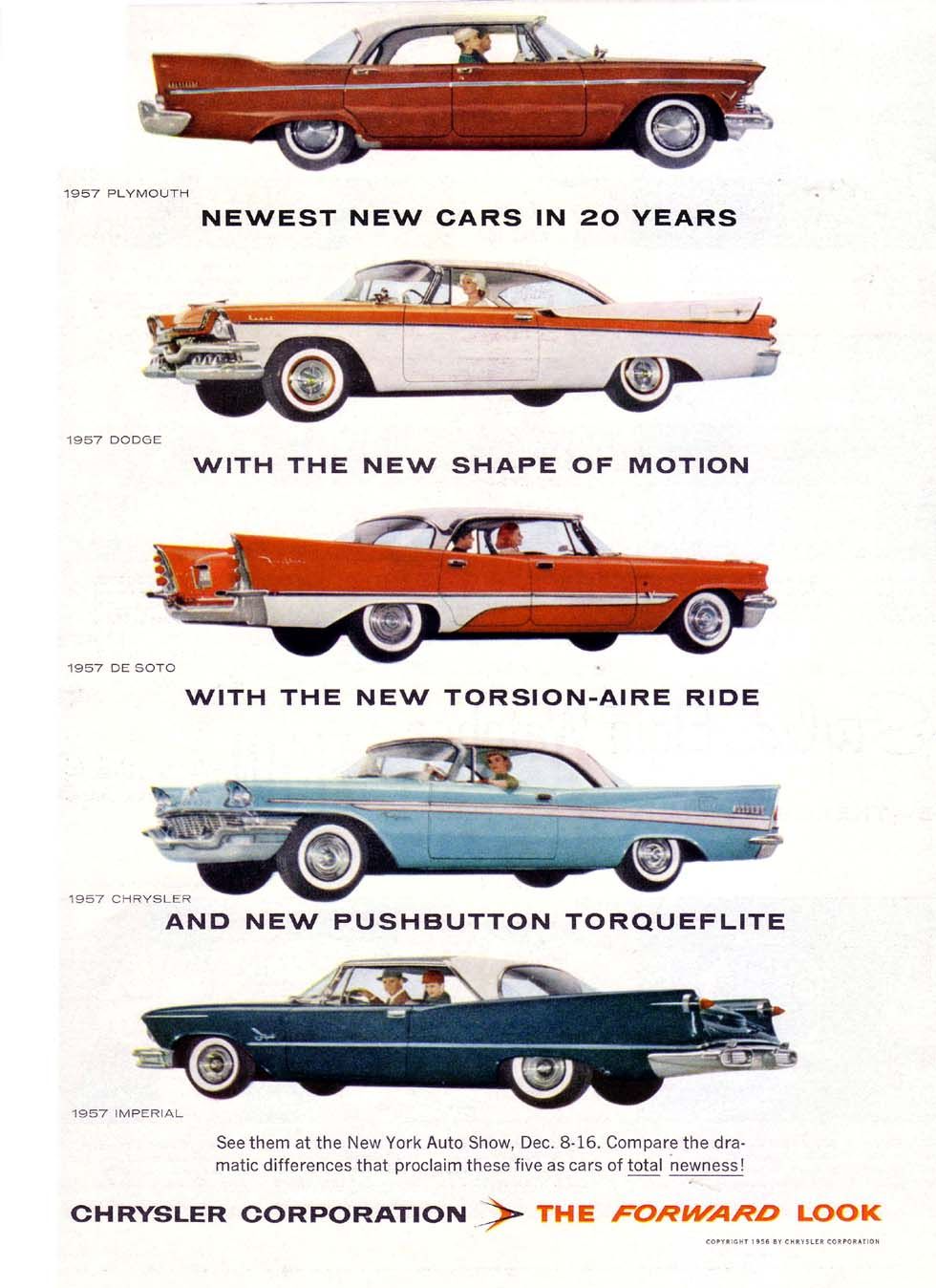
Chrysler's financial performance improved substantially in 1957, and its styling brought the company renewed attention. The advertising campaign called it the New 100-Million-Dollar Look. Exner and his design team received the Gold Medal Award from the Industrial Designers' Institute for their contribution to automotive design.
In mid-1956, while working on future designs, Exner suffered a serious heart attack. After a lengthy recovery, he returned to Chrysler in 1957. That year, he became the company's first vice president of styling, an appointment that reflected the importance of his work and his influence on Chrysler's future direction.
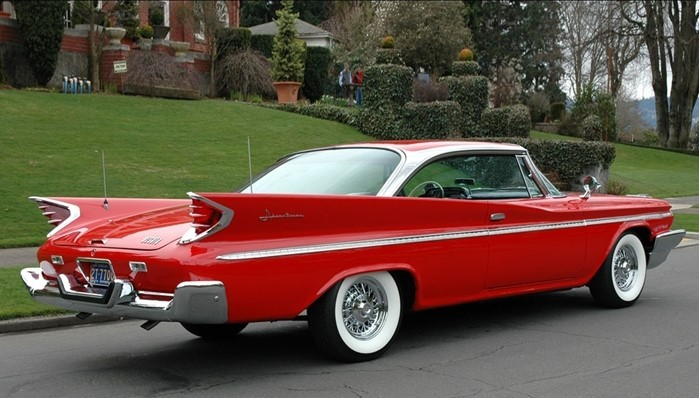
The 1960 DeSoto Adventurer was a special, limited-production, high-performance model and the top trim level in the DeSoto lineup. The sports coupe truly highlighted the beauty and style of Exner's Forward Look aerodynamic design. Available with an optional 383-cubic-inch V-8 equipped with dual four-barrel carburetors and Chrysler's Ram Induction system, the Adventurer combined distinctive styling with impressive performance. Chrysler's swiveling front seats were another noteworthy feature.
The 1961 model year would be the last for DeSoto.
Predicting the future four or five years down the road, especially in the automobile business, has always been a challenge. Virgil Exner and his design team were about to discover just how difficult that could be.
1958 would prove to be a difficult year for the entire automobile industry, with sales suffering amid a national economic recession. Chrysler faced additional problems, including quality control issues and premature rust complaints. Some of these problems were associated with the company's rapid introduction of new technologies and manufacturing changes. Together, these issues damaged Chrysler's reputation and contributed to a significant decline in sales and market share.
In the span of just a few months, Chrysler went from celebrating record first-quarter earnings in 1957 to experiencing the worst quarter in its history in 1958. The company was facing a difficult recovery.
By the early 1960s, the buying public was losing its appetite for oversized tailfins. Styling tastes were changing, and competitors were moving in different directions. Chrysler president Lester L. "Tex" Colbert wanted the 1962 Dodge and Plymouth models downsized, based in part on expectations about what the competition would be doing.
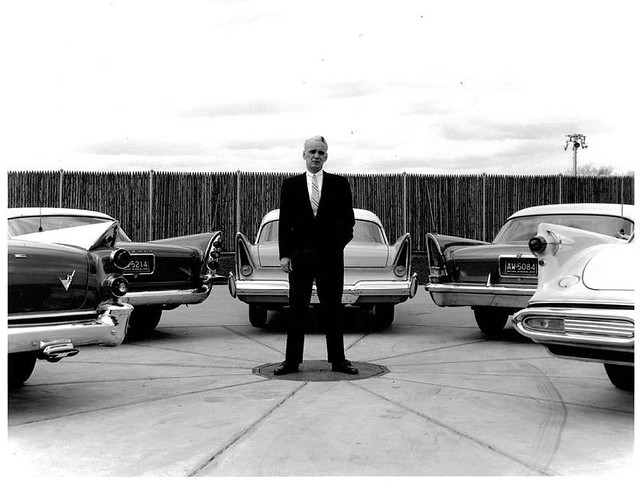
Exner disagreed with the direction of the redesign. The resulting 1962 Dodge and Plymouth models departed sharply from the proportions and styling that had defined the Forward Look. When the new cars reached showrooms, their appearance was poorly received by many consumers and critics. The smaller, unusual-looking models struggled against the competition from Ford and General Motors.
Chrysler's sales problems and internal disagreements over design ultimately led to Exner's departure from the company. He was retained as a consultant, but his influence over Chrysler's styling direction had come to an end.
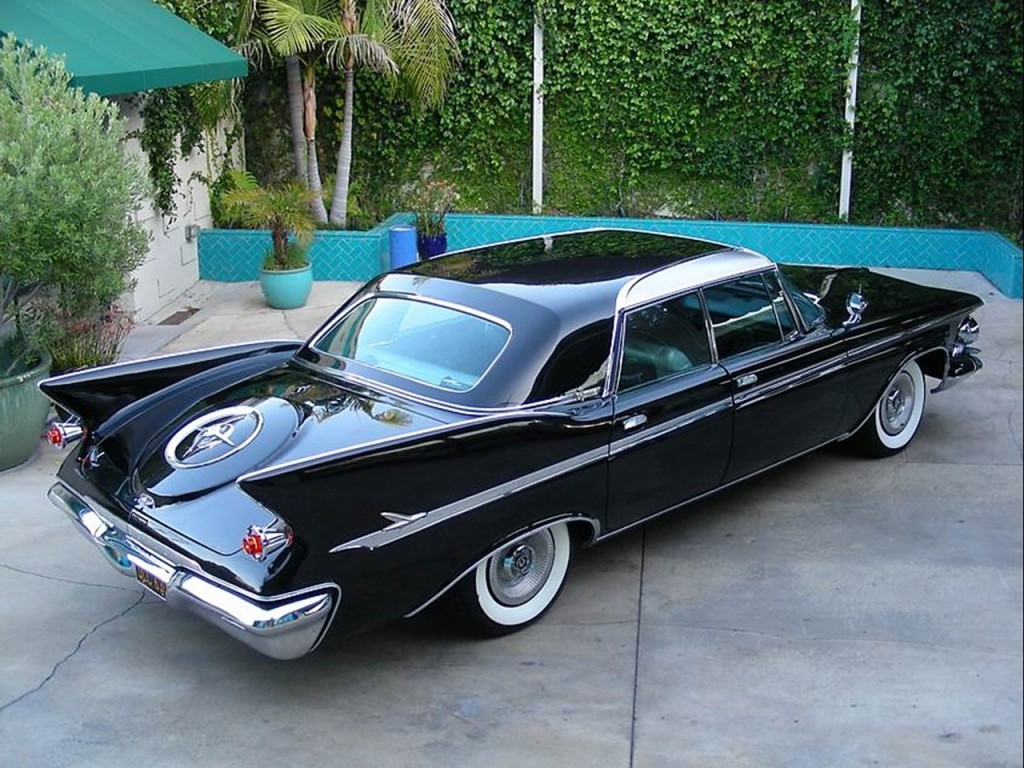
No, it isn't a Chrysler!
The Forward Look began with the flagship Imperial and reached what I consider its zenith in 1961 with the incomparable Imperial LeBaron Southampton. It remains a remarkable example of American luxury car design, with an elegance and presence all its own.
The 1961 Imperial LeBaron Southampton rode on a 129-inch wheelbase and measured approximately 227 inches in length. Its exterior width reached 81.7 inches, giving it an imposing presence on the road. Only 1,026 LeBaron Southampton sedans were produced, making this an especially distinctive example of Imperial's luxury offerings.
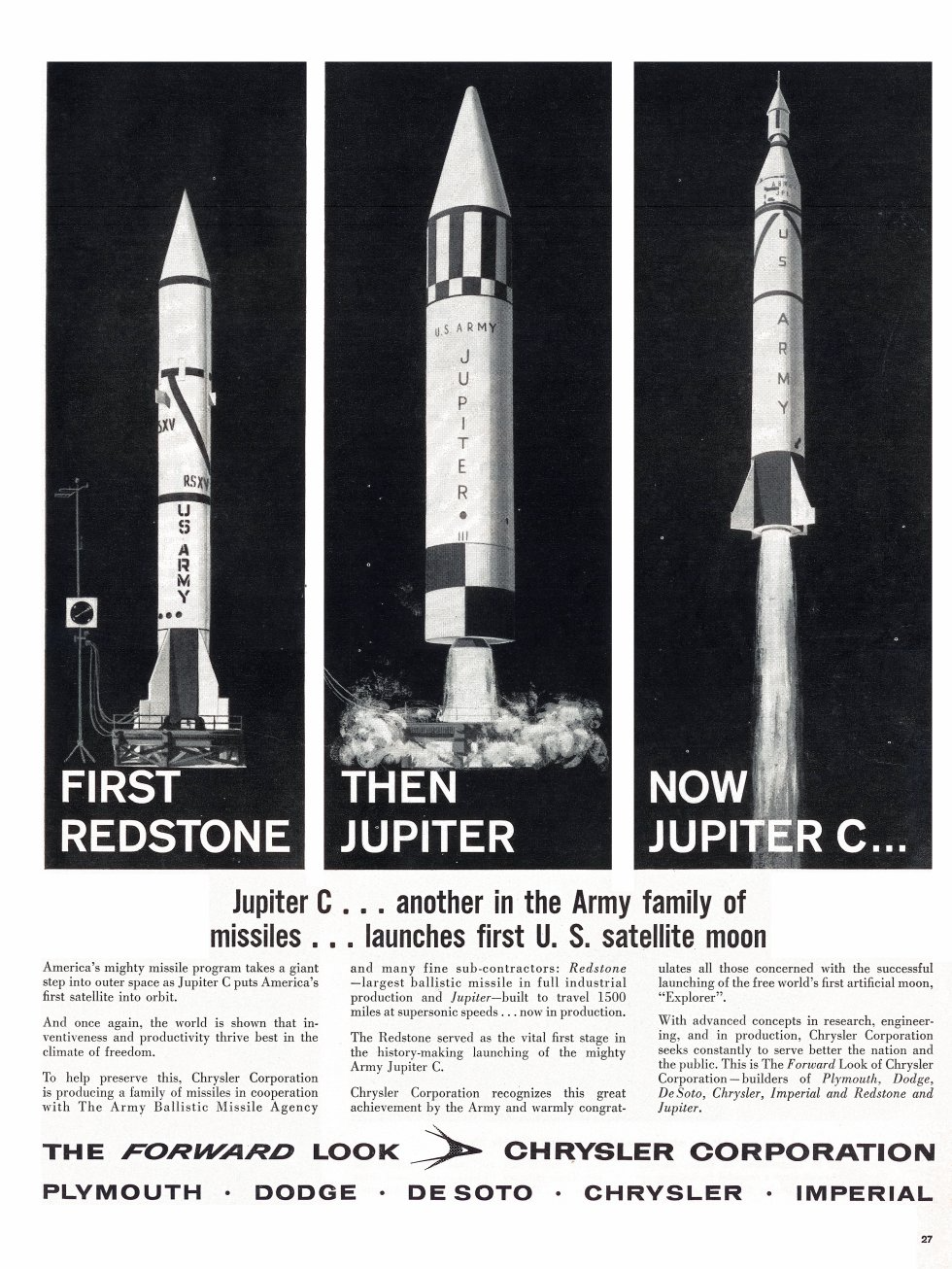
Photo from the Ferens collection.
Chrysler's advertising described the Imperial as the ultimate expression of American luxury, emphasizing its size, refinement, quietness and distinction. It was a fitting statement from a company that had spent much of the previous decade pushing the boundaries of automotive styling.
Virgil Exner believed in the aerodynamic possibilities of automotive design and fought to convince Chrysler that cars and aircraft shared a natural design kinship. His vision helped transform Chrysler's automobiles and gave the American automotive industry some of its most memorable designs.
The Forward Look remains one of the defining chapters in automotive history. For me, Exner's work represents the creativity, optimism and unmistakable style of the Jet Age. He was a designer who dared to look beyond the automobile as it existed and imagine what it could become. His legacy lives on in some of the world's most beautiful automotive designs.
Bibliography:
On-line Imperial Club
National DeSoto Club archives
Virgil Exner Visioneer by Peter Grist, Veloce Publishing Limited, 2007
Standard Catalog of American Cars 1946-1975, Gunnell, John, 1987
Chrysler sales literature 1955-1961
Detroit Historical Society: Virgil Exner biography
Fortune: Chrysler's Private Depression, March 1958
Hagerty: 1956 Chrysler 300B history and specifications
The Henry Ford: 1956 Chrysler 300-B artifact and specifications
Richard M. Langworth: Virgil Exner, Part 2: Chrysler, Birth of the Tailfin