

By: A. Wayne Ferens
Images courtesy of Ferens collection, Mecum Auctions and Yenko.
Edited by MotorCities National Heritage Area Staff
MotorCities Story of the Week
During the mid-1960s and early 1970s, when high-performance production cars were reaching their zenith, Detroit’s automakers offered a remarkable variety of low-production, high-performance models and options. General Motors, Ford, Chrysler and American Motors all competed for a share of the performance-car market.
At the time, I was working in engine and powertrain development at Chevrolet Motor Division’s GM Technical Center. I had a firsthand view of the engineering culture that helped shape some of the most iconic vehicles of this golden age of performance. It was an era of innovation, fewer restrictions than we see today and big-block V-8s that ruled the roads and racetracks.
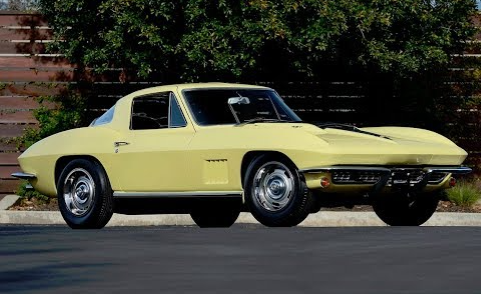
One of the most legendary performance cars of that era was the Chevrolet Corvette equipped with the RPO L88 package. Today, these cars are among the most coveted and valuable Corvettes ever built. Under the direction of Corvette Chief Engineer Zora Arkus-Duntov, Chevrolet introduced the L88 for the 1967 model year, the final year of the second-generation Corvette, commonly known as the C2 Sting Ray. The redesigned third-generation C3 Corvette followed for the 1968 model year.
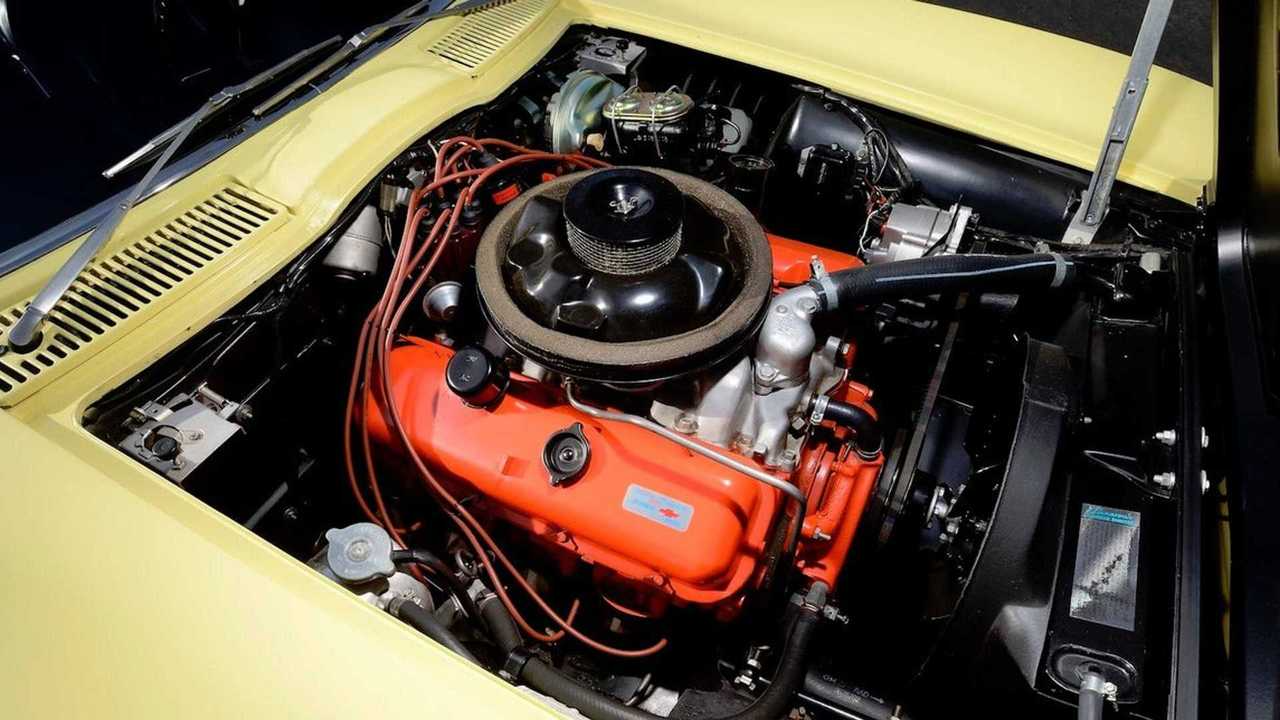
The L88 was far more than an ordinary high-performance option. It was a factory-built, competition-oriented package centered on a 427-cubic-inch V-8 with aluminum cylinder heads, forged internal components, a high-lift solid-lifter camshaft and a 12.5:1 compression ratio. Induction came from a Holley four-barrel carburetor rated at 850 cubic feet per minute, mounted on an aluminum intake manifold. Power went through a heavy-duty Muncie M22 four-speed manual transmission.
Chevrolet advertised the L88 at 430 horsepower. That conservative rating did not tell the whole story. The engine was designed for sustained high-rpm operation and required high-octane racing fuel. Published historical accounts have placed its actual output substantially above the factory rating, with figures around 550 to 560 horsepower commonly cited. I also remember seeing L88 engines run on the dynamometer at Chevrolet Engineering and producing figures in the 500- to 600-horsepower range at approximately 6,500 rpm. What a sound!
The L88 package required additional performance equipment, including the F41 heavy-duty suspension, J56 heavy-duty brakes, K66 transistorized ignition, G81 Positraction limited-slip differential and an aluminum radiator. The M22 four-speed transmission was also part of the package. Chevrolet deliberately kept the L88 focused on competition rather than everyday comfort. Radio deletion was standard, and the 1967 cars included a heater and defroster delete. Air conditioning was not available with the package.
Chevrolet built just 20 L88 Corvettes for the 1967 model year. Buyers could order a coupe or convertible, and the cars were available in the factory's range of exterior colors. Their rarity was only part of the story. These cars were engineered with racing in mind, and their reputation was established on the track.
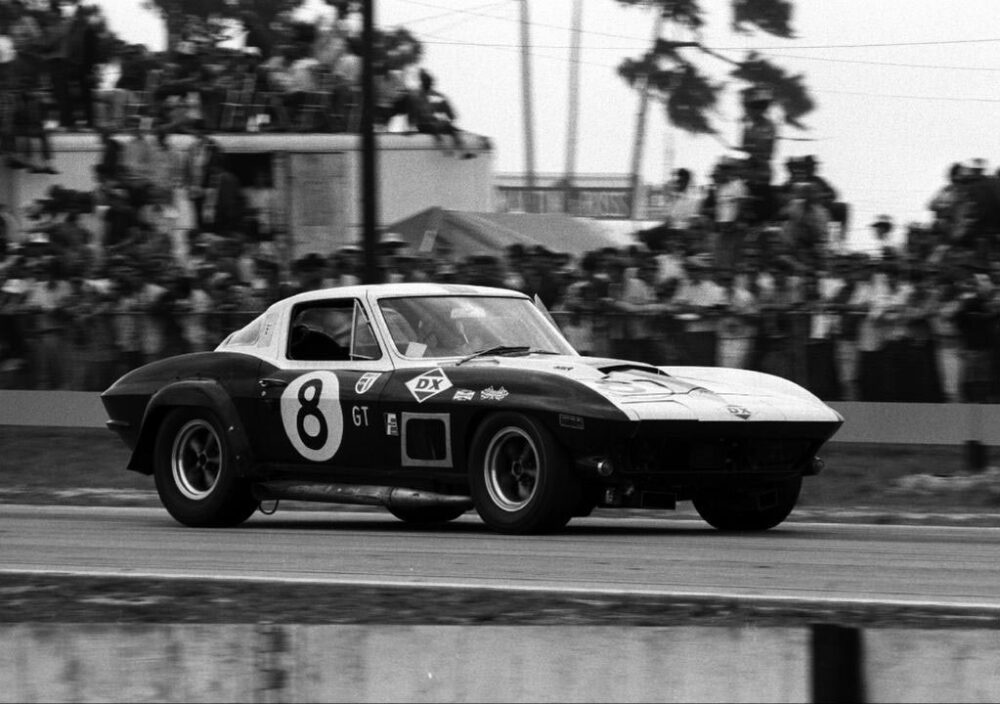
Photo: Ferens/Yenko collection
From the beginning, the L88 proved itself in SCCA competition and international endurance racing, including events at Daytona and Sebring. My dear friend Don Yenko (1927-1987), a Chevrolet dealer and accomplished racer who won four SCCA national championships, helped put the L88 on the international stage.
For the 1967 12 Hours of Sebring, Yenko and co-driver Dave Morgan campaigned the first production L88 Corvette as part of the Sunray DX racing effort. The car finished first in its GT class and 10th overall, an impressive result for a car making its international endurance-racing debut. It also demonstrated that Chevrolet’s new competition package could take on established racing machinery.
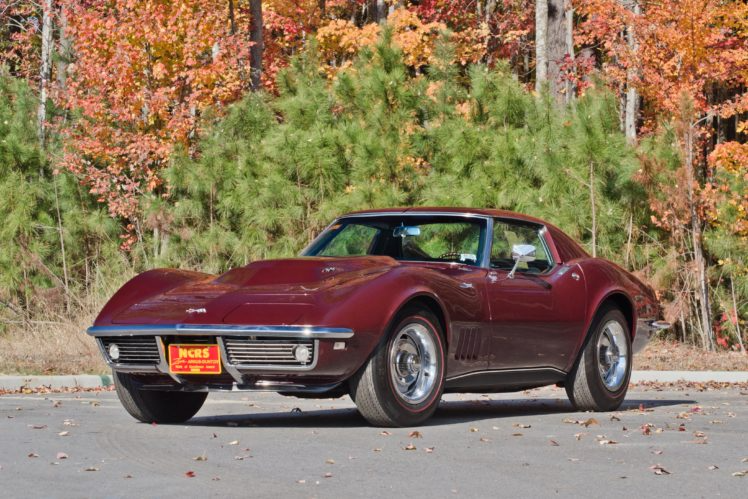
Photo: Mecum auctions
The L88 program continued into 1968, when Chevrolet introduced the all-new C3 Corvette. Its dramatic styling featured a long, sculpted body, pronounced fenders and a more aggressive profile. The new generation retained the 98-inch wheelbase, and buyers could choose a coupe or convertible. The convertible could also be ordered with an optional removable hardtop.
The L88 remained available for 1968 with the same basic 427-cubic-inch engine concept and a competition-oriented drivetrain. One of its most recognizable features was the raised fiberglass hood, designed to accommodate the induction system and cold-air arrangement. As before, the L88 package prioritized performance over luxury. It was intended for serious enthusiasts and racers, not buyers looking for a fully equipped touring car.
Chevrolet produced only 80 L88 Corvettes in 1968. Although these cars were built with competition in mind, not every example necessarily went on to a racing career. Some were purchased by owners who wanted the ultimate expression of Corvette performance for the street.
The St. Louis assembly plant continued building Corvettes until production moved to Bowling Green, Kentucky, in 1981. Meanwhile, the L88 story reached its final chapter in 1969, the last model year for this legendary engine option.
The 1969 L88 retained the essential performance formula of its predecessors, although Chevrolet made engineering refinements during the model year. The car continued to be offered as a coupe or convertible and in the available factory exterior colors. Its aggressive hood and competition-focused equipment made it recognizable among other Corvettes.
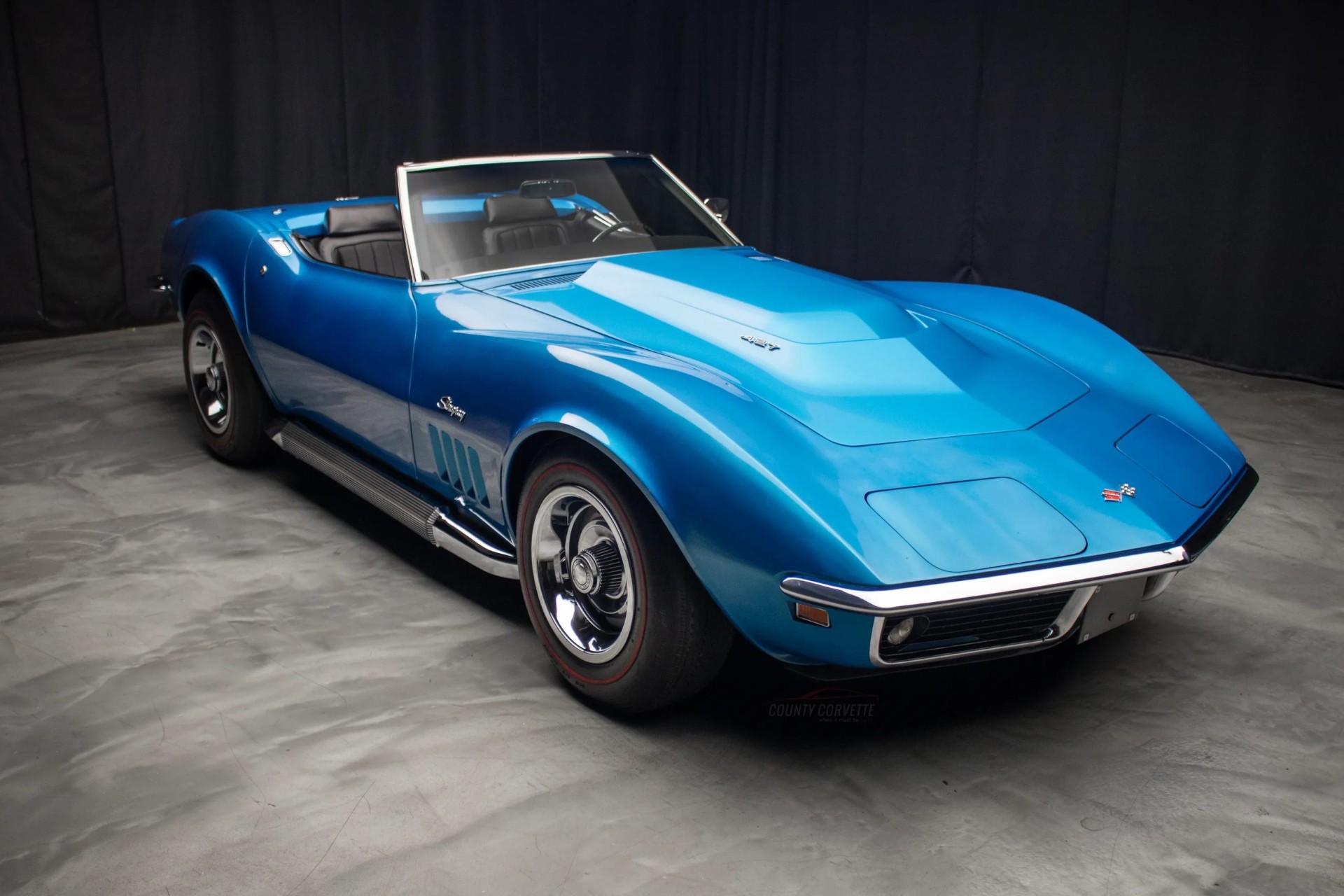
Photo: Ferens collection
The 1969 model also brought a notable change for Corvette buyers: factory side-mounted exhaust became available as RPO N14. The 1969 model year was the only year in which Chevrolet offered this option on the C3. Headrests were also standard equipment.
Chevrolet built 116 L88 Corvettes in 1969, bringing total production for the three-year run to 216 cars. The L88 option was discontinued after that model year, leaving behind one of the most celebrated chapters in Corvette performance history.
These cars combined a lightweight fiberglass body with a chassis engineered for performance, a powerful 427-cubic-inch V-8 and competition-grade components. They were among the most formidable American production-based sports cars of their time. Today, original, well-documented L88 Corvettes are highly prized by collectors and can command prices in the millions of dollars, depending on their originality, condition, provenance and racing history.
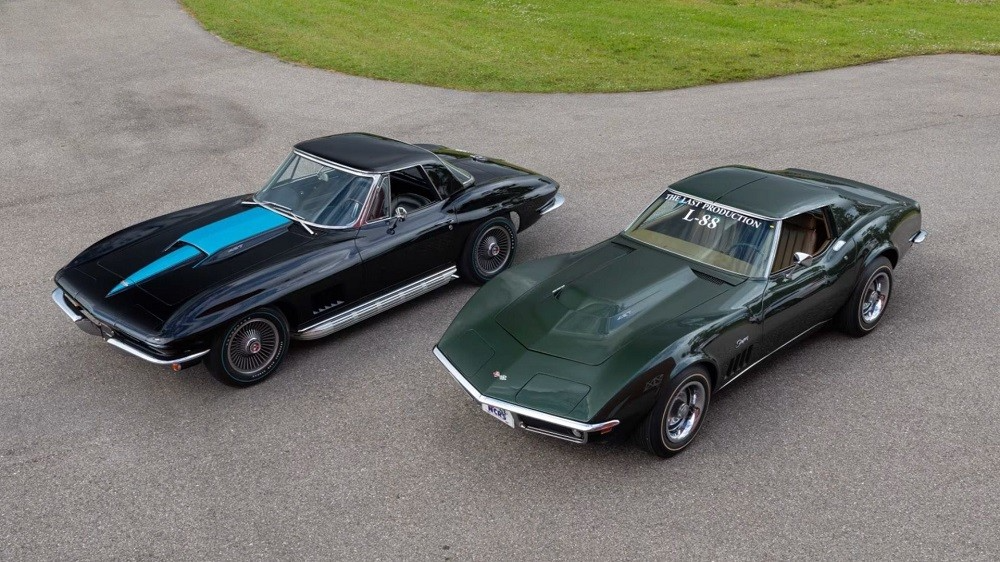
Photo: Mecum Auctions at Kissimmee, Fl 2024
Now, take a look at this remarkable photograph showing the first 1967 Corvette L88 produced alongside the final L88 built in 1969.
Yes, L88 Corvettes are rare. But Chevrolet had another surprise in 1969. Do you know what it was?
Bibliography
Vette Vues magazine
CorvetteForum.com
Catalog of Corvette 1953-2005 by John Gunnell
Corvette. The Definitive Guide 2005 By Andrew Montgomery
GM Factory Performance Literature
Mecum Auction Catalog 2004
Corvette Action Center, “1967–1969 L88 Corvette Options and Production Numbers.” This reference documents the 20, 80 and 116 cars built in 1967, 1968 and 1969, respectively, and lists the associated regular production option codes.
Corvette Action Center, “Last Documented 1969 L88 Corvette Built.” This account describes the 427-cubic-inch engine, 12.5:1 compression ratio, aluminum cylinder heads, Holley 850-cfm carburetor and competition equipment.
Corvette Action Center, “1967 Corvette L88 Sunray DX.” This historical account documents the debut of the L88 at the 12 Hours of Sebring on April 1, 1967, and the car’s first-in-class, 10th-overall finish with Don Yenko and Dave Morgan.
Corvette Action Center, “1969 Corvette Production and Performance Numbers.” This reference confirms 1969 production figures and the availability of the N14 side-mounted exhaust option.
RPO Archive, Chevrolet Corvette records. The archive cross-references factory option codes and Chevrolet Heritage documentation.