

By: Joseph E. Pray
Images courtesy of the Pray Collection and Eaton County Historical Museum.
Organized by the Capital Region MotorCities Stewardship Committee.
Edited by MotorCities National Heritage Area Staff
MotorCities Story of the Week
In the first decade of the early 1900s, in the small mid-Michigan community of Charlotte, one family set out to expand its manufacturing enterprise by entering a revolutionary new industry. Their ambitions were inspired by the rapid development of the “horseless carriage”—what we now know as the automobile.
John L. Dolson and his family were already successful carriage and wagon manufacturers, known for their craftsmanship and durability. Their company, John L. Dolson & Sons, was owned and managed by John L. Dolson and his sons, W. Elton and D. Elmore Dolson. The family had recently built a new factory in Charlotte to expand and improve production. Yet the Dolsons recognized that the future of transportation would likely depend on gasoline-powered internal combustion engines rather than horses.
Like many carriage builders of the era, they began applying their knowledge of wagon construction and coachwork to developing an automobile of their own.
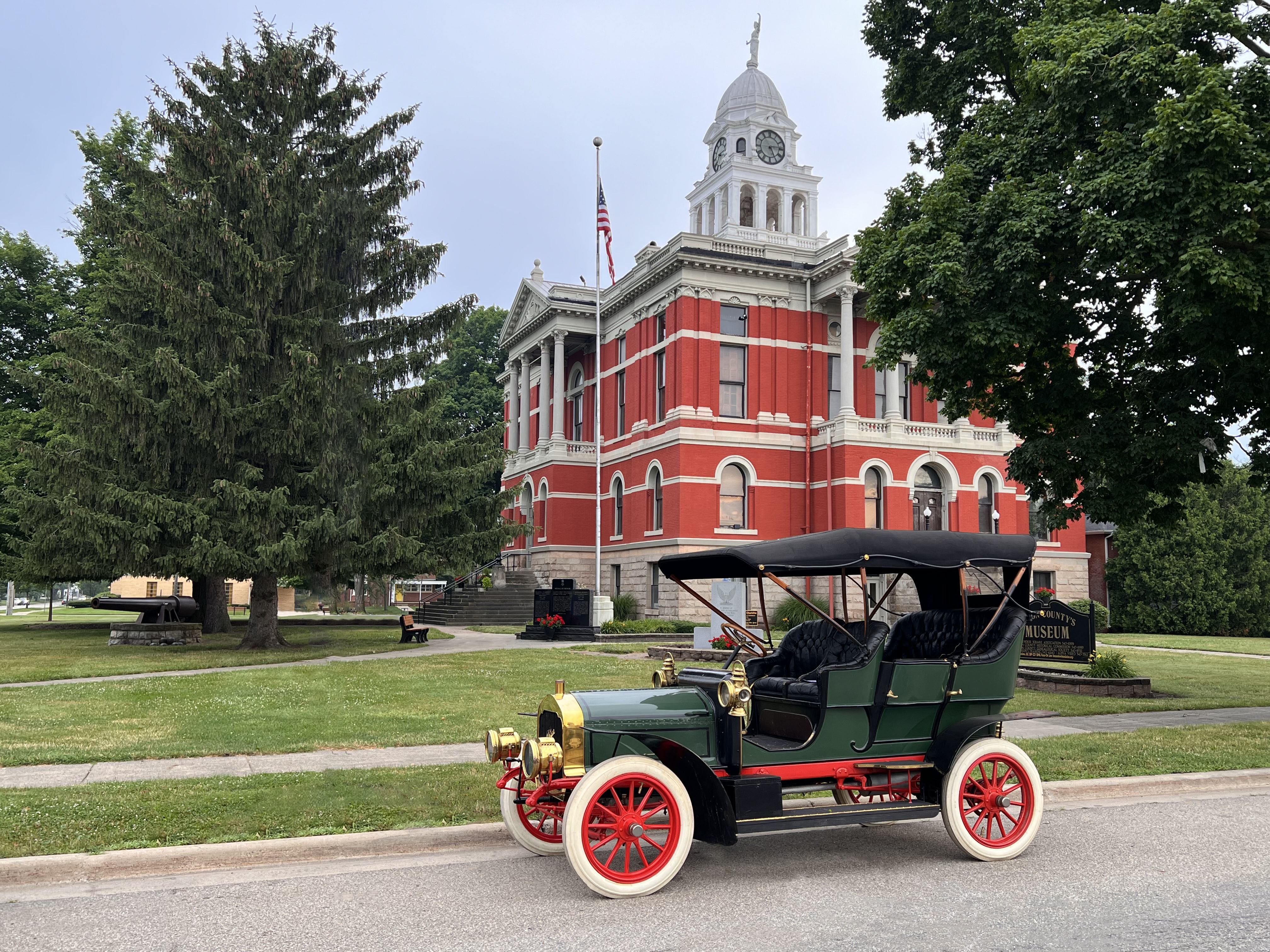
A 1907 Model H, last known surviving Dolson auto, owned by the Pray Family, in a recreation of the image of the 1905 photo in front of the Eaton County Courthouse
From Carriages to Automobiles
The company began experimenting with automobile development around 1902, and an early Dolson automobile was completed by 1903.
Compared with many experimental automobiles of the era, the first Dolson was moderately sized, with an 80-inch wheelbase. Early models used components sourced from other manufacturers.
By 1904, the company was advertising its first production automobile for $1,450, a considerable sum at the time. The car featured a two-cylinder opposed engine reportedly built by Buick in Flint, Michigan. Its radiator was mounted at the front, an arrangement that would become standard in automobile design. The gasoline tank was located beneath the hood, behind the radiator.
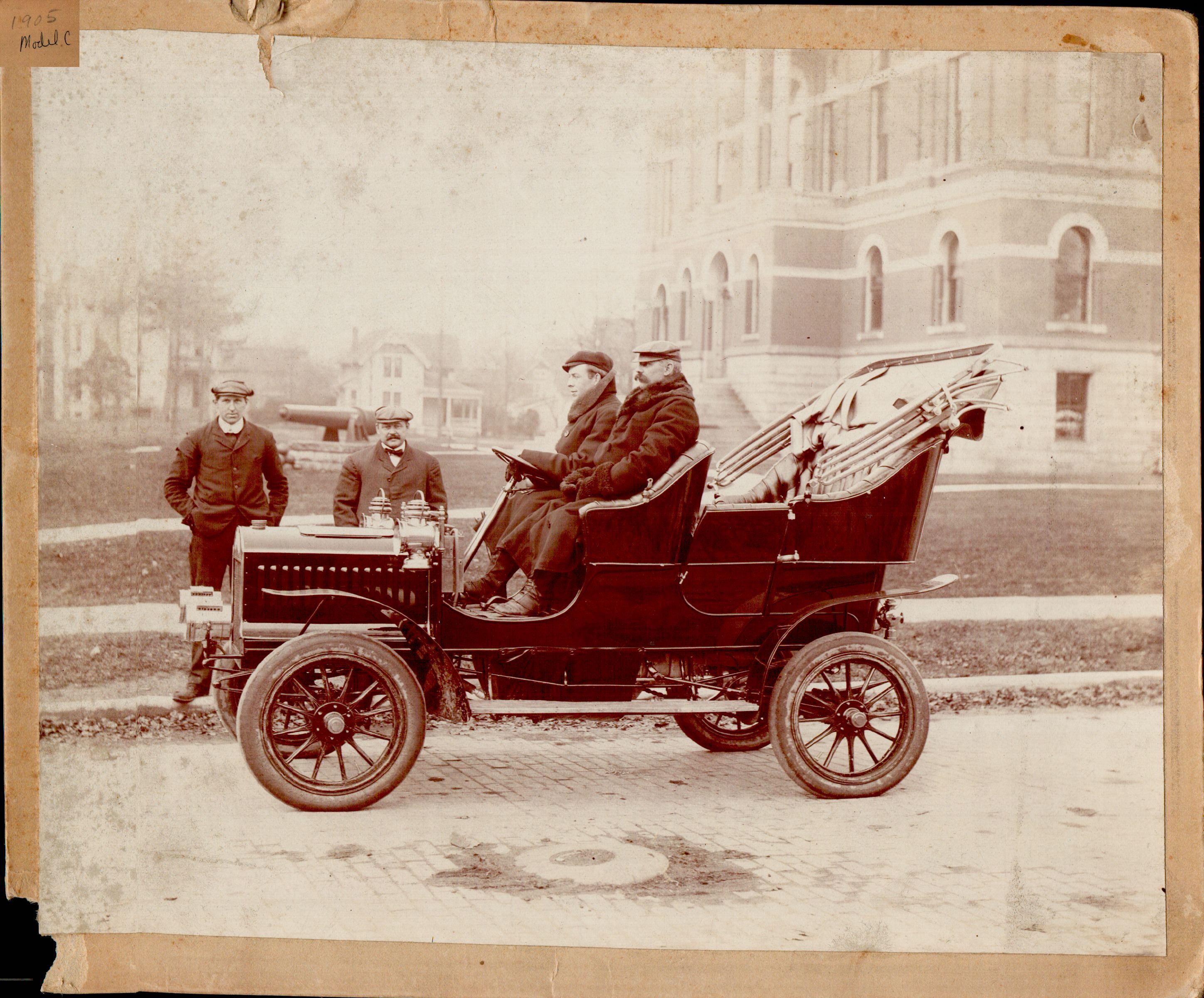
1905 Model C Dolson auto with John Dolson at the helm in fron the of the Eaton County Courthouse
The Dolson Automobile Company
The family’s transition to automobile manufacturing led to the establishment of the Dolson Automobile Company. By 1905, the company had developed a somewhat larger car with a 90-inch wheelbase. The engine was mounted beneath the driver’s seat on a separate frame within the automobile’s main frame. This “double-frame” construction became an important feature of later Dolson automobiles.
The design was intended to increase the car’s strength and reduce vibration transmitted through the chassis and body. These features helped the Dolson earn its reputation and its memorable advertising identity as the “Durable Dolson.”
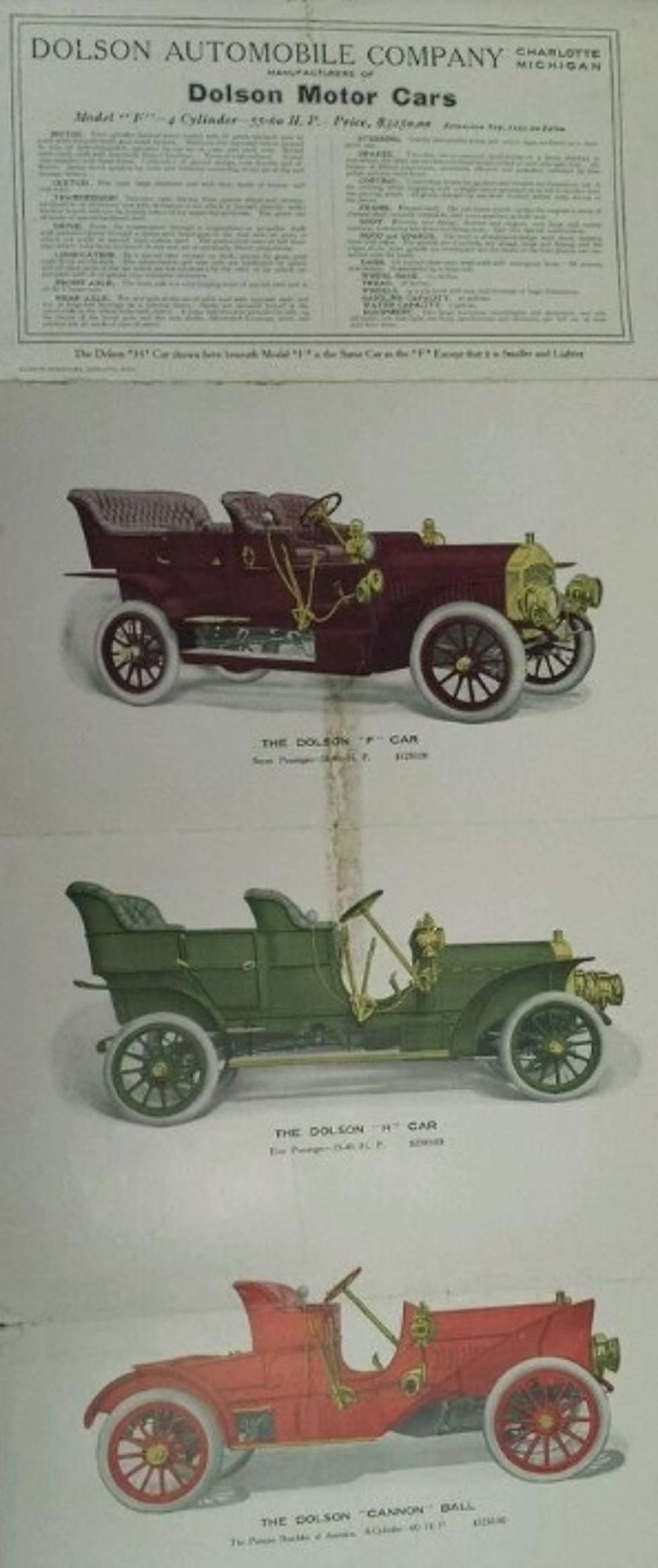
A 1907 Dolson factory brochure from the Pray Collection.
The 1906 Model E
The 1906 Dolson Model E represented a major step forward. It was the first Dolson to feature a four-cylinder engine mounted beneath the hood, behind the radiator. Moving the engine forward allowed the gasoline tank to be relocated beneath the front seat.
The engine was supplied by the Milwaukee Engine Company. Its four cylinders were arranged in two cast cylinder blocks, each containing two blind-bored cylinders bolted to the crankcase.
The Model E reflected the Dolsons’ progression from relatively modest, carriage-inspired automobiles to larger and more sophisticated motorcars. The company’s experience building sturdy wagons and carriages remained evident in the automobile’s construction, while its increasingly powerful engines positioned Dolson among the more ambitious American automobile manufacturers of the period.
A Reputation Earned on the Road
Contemporary accounts described the Dolson as a powerful and durable automobile that traveled over the primitive roads of the period with relatively little difficulty while providing a notably smooth ride.
Automobile contests and endurance runs were important promotional tools during this era. Roads were often rough, muddy, deeply rutted and poorly marked. Simply completing a long-distance tour without mechanical failure was an accomplishment, and manufacturers eagerly publicized successful performances as proof of their automobiles’ quality.
One of the best-known events entered by Dolson was the second annual endurance run known as “Around the Kite,” held in Southern California on June 29 and 30, 1906. The two-day tour followed a route through the Los Angeles and Riverside region. The Dolson completed the event with a perfect score and was recognized as a winner in its class.
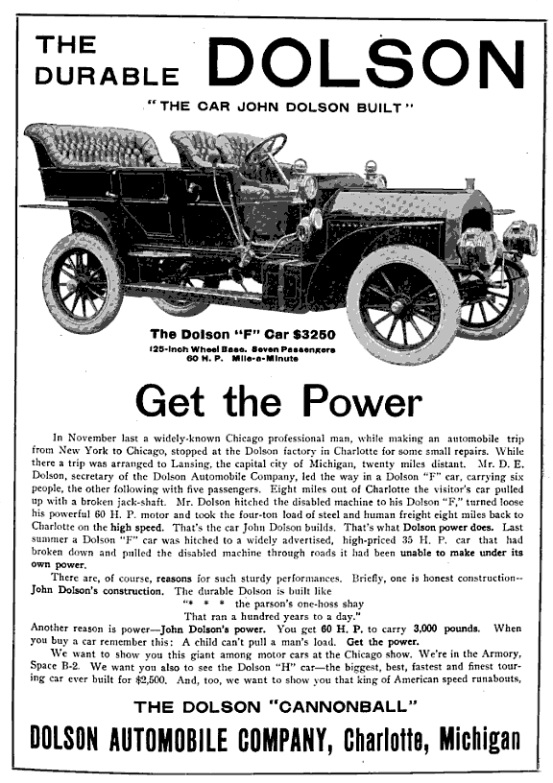
Dolson 1906 advertisement from the Pray Collection.
Another notable performance came during the Chicago 100-Mile Reliability Contest in July 1906. Sponsored by the Chicago Automobile Trade Association and associated with the Chicago Automobile Club, the event was designed to test automobile reliability under actual road conditions. A Dolson again distinguished itself by winning its class.
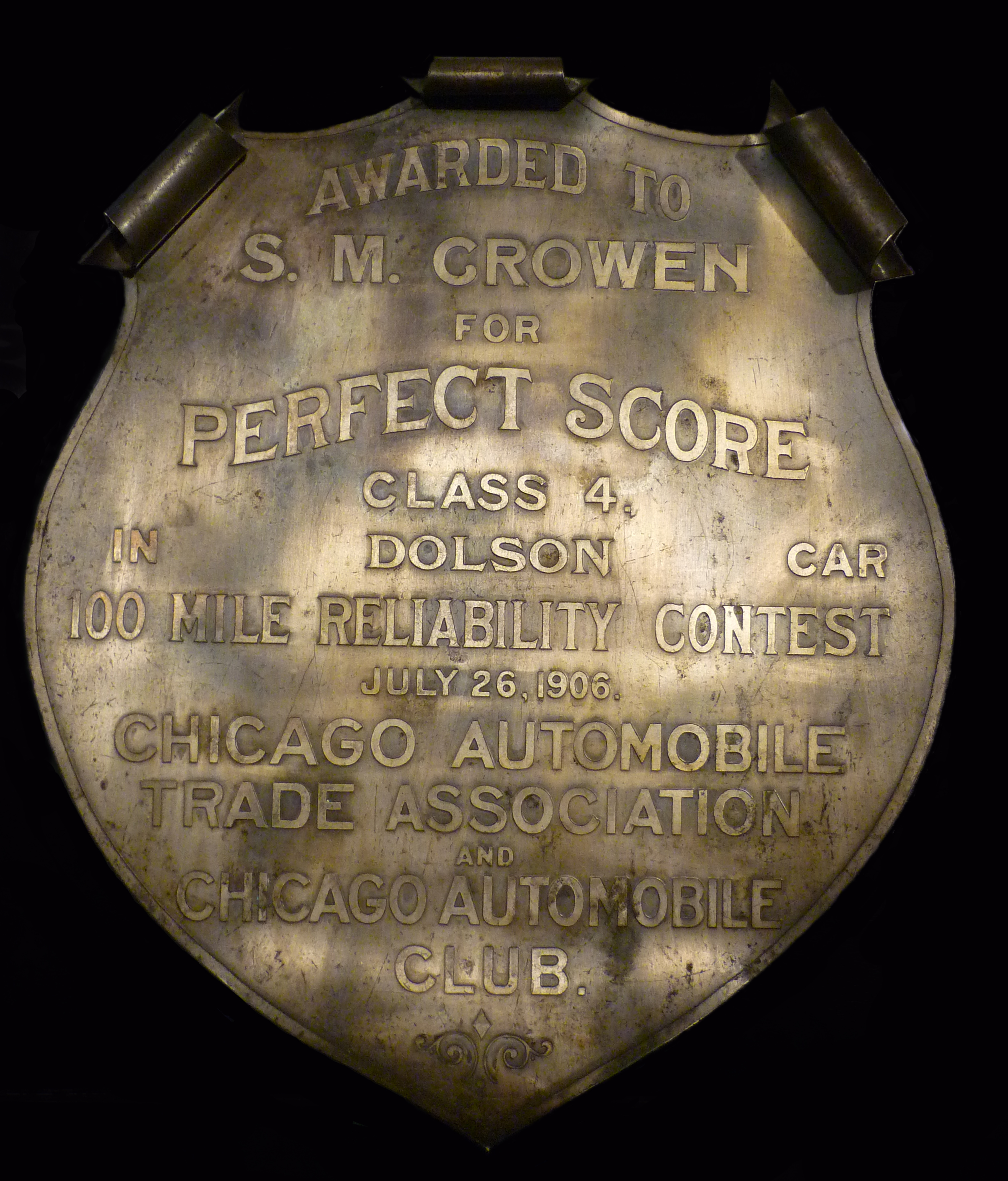
Plaque of 100 MIle reliability contest shield award from the Pray Family collection.
These accomplishments provided the company with valuable publicity. More importantly, they reinforced the quality Dolson most wanted the public to associate with its automobiles: durability.
Built by a family already respected for the strength and craftsmanship of its wagons and carriages, the Dolson automobile carried that reputation into the new motor age. For a brief but fascinating period, Charlotte, Michigan, helped shape the future of American transportation, and the Durable Dolson became part of Michigan’s remarkable automotive story.
Bibliography
Dragone, Manny. Interview by Joe E. Pray. 2012. Dragone Motor Sales.
Los Angeles Herald. “Powerful Autos Complete Endurance Run.” July 1, 1906. Courtesy of the Library of Congress.
Rohlfs, Bill. “The Car John Dolson Built.” Antique Automobile, May–June 1982.
“San Francisco Earthquake.” Charlotte Republican-Tribune, May 25, 1906.
Special acknowledgement: When the 1907 Dolson Model H first returned to mid-Michigan under the ownership of the Pray family of Charlotte it was placed on display in the R.E. Olds Transportation Museum as an exhibit of the last remaining example of a nearby small-town manufacturer. With the help of the museum, its volunteers, and mechanical staff necessary maintenance was completed while simultaneously educating the Pray family on its systems, care and maintenance.